
Tag Archives: Vegetable stock

Red Pepper Sauce

Red Pepper Sauce.
Rich, thick, looks brilliant and tastes even better
click to enlarge
The colour is vibrant and the taste is so pure.

As we continue to search for the beauty of flavour simplicity, we’ve honed this recipe to produce a sauce that’s one of the most beautiful to look at, let alone a tasting delight.

Ingredients

10 medium size red peppers
Unsalted butter
Pinch of salt
Just a tiny bit (thimbleful?) of veg stock
Maybe, just maybe, a drop or two of organic maple syrup

Preparation

Cut the peppers into quarters and remove all traces of the white bits and seeds.

Brush with a small amount of light olive oil on both sides, and place them on a baking sheet in a roasting tray, skin down.

Put the tray on the middle shelf of an oven at 180C.

After 20 mins or so when the peppers are cooked, remove and place the quarters in a poly bag to sweat a while.

One by one, take them out and remove the black bits, only. Be careful not to lose any of the juices.

When cooked, remove the peppers from the oven click to enlarge
Place the juices and peppers into a liquidiser and liquidise well. You may find the liquidiser struggles given there’s minimal liquid. If this happens, shake it about. If this doesn’t help, add a thimbleful of vegetable stock.

Sieve through a ‘normal’ sieve using the back of a spoon to force the liquid through.

Liquidise again, adding just a pinch of salt and reasonable lump of unsalted butter to create a rich mousse.

Maple syrup?

If, and it’s a big if, you find the sauce to be slightly bitter, add a drop or two of maple syrup. A slight bitterness tends to be caused by the type of pepper and the time of year. Smaller peppers are sweeter than large.

Removing the skins

This is a question we’re often asked. The answer is simple.

Removing the skins,

  • is a fiddly and time consuming job, and never 100% successful.
  • removing the skins also removes some of the gorgeous oils

…so keep the skins and let the sieve remove them!

Piers and Lin
from the galley of
Play d’eau
Fleming 55
Beaucette Marina

You can get in touch with us any time by using our Contact Form.

Pea Soup

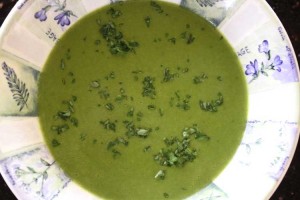
This pea soup has such a great depth of colour
click to enlarge
The French just seem to have a way with food, don’t they?

When visiting France, we always look forward to our first can of Petit Pois. Only recently, did we realise the one we really liked had lettuce with it. Lettuce? Well, that sowed the seed for this recipe.

It took a number of trials, but we believe this to be the winning formula – and “it’s yumptious” as my great niece told me.

For the soup – 8 servings

1kg frozen peas – petit pois are best
25gm flat leaf parsley leaves only, no stalks*
30gm lettuce leaves (from green ‘floppy’ lettuce)
40gm Salted butter
1 ltr Vegetable stock
Salt

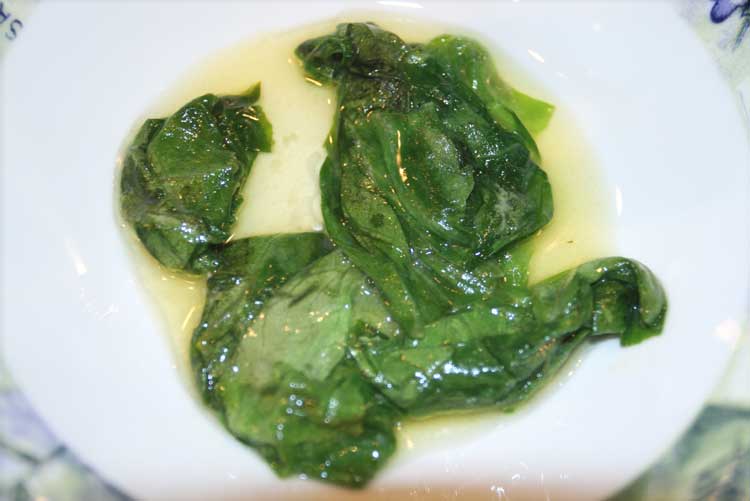
Wilt the lettuce in the butter and set aside
click to enlarge
* Keep the stalks for your next batch of vegetable stock.

For serving

Some finely chopped parsley for the garnish
Bread rolls or Croutons

You will need

Saucepan
Hand-held or small stand-alone liquidiser

Making the Pea soup

Trim the lettuce until you have the correct weight of green leaf.

Over a medium heat, melt the butter in a saucepan, add the lettuce and stir gently until it’s wilted. Remove the mix to a dish and set it aside.

The peas, parsley and stock
all a-bubbling in the pot
click to enlarge
Into the same pan (don’t clean it – whatever is left is good flavouring) place the peas and enough stock to cover them. Add the parsley on top.

As it heats to simmer point, stir occasionally, making sure there’s enough stock to keep it all covered. Keep simmering for a few minutes until the peas are just cooked.

Remove the pan from the heat and add the lettuce and remnants of the butter.

After it’s cooled a while, liquidise well – really well.

Adjusting to taste

At this point, you need first to adjust the soup to the right consistency. If you think it’s too thick, add more stock in small quantities. We believe this soup is far better thinner than thicker.

Once the consistency is right, add salt. Keep tasting until this is just right as well. Don’t add pepper. The black specs will spoil the look.

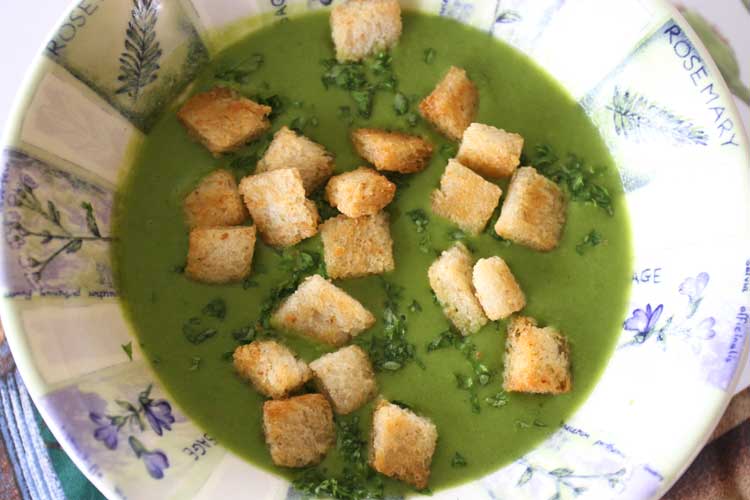
‘Le crunch’ from croutons are a great addition
click to enlarge
As with so many of our recipes, this soup is much better after a night in the fridge. The flavours come together and seem to enrich themselves.

A ‘minty’ enhancement

If you want a little something extra, go ‘minty’. Start by adding 25gm of mint leaves before liquidising, with more if you want a hefty minty kick.

Serving the Pea Soup

Reheat the soup but do not let it boil. Stir well and check again if it needs more salt and more stock. If you’ve used all your stock, skimmed milk is OK.

Pour into warm bowls and add a sprinkling of finely chopped curly parsley on top.

For ‘le crunch’ add some croutons but don’t let them become soggy. To make sure this won’t happen, serve them separately.

This really is a ‘yumptious’ soup.

Piers and Lin
from the Galley of
Play d’eau

You can get in touch with us any time by using our Contact Form.
Gazpacho to cool those hot, hot days

This Gazpacho is just perfect for a hot day when ‘cool’ is needed. It’s so refreshing, so ‘clean’.

(Modified on 3.8.2013 & 17.8.2013).

Making it in these quantities means you’ll have a good number of servings. Any left over can be kept in the fridge for use during a heat-wave, or frozen whilst you wait for the next heat-wave.

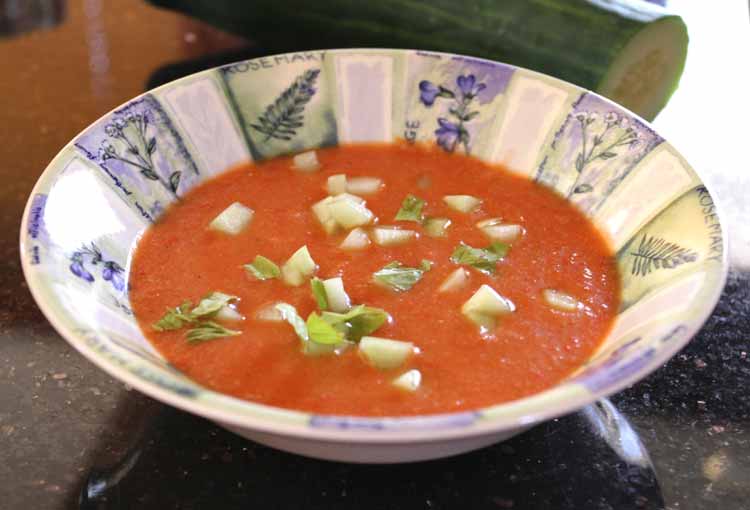
Gazpacho
dressed with diced cucumber and shreds of basil
click to enlarge
Ingredients

2 kgs tomatoes, mixed varieties, all very ripe
1 large red pepper, deseeded, pith removed, chopped
1 medium size red onion, chopped
1 large cucumber, peeled and sliced
6 tbsp rich tomato sauce
1 tbsp tomato paste
200ml vegetable stock (or water)
100ml extra virgin olive oil
3 tbsp. balsamic vinegar
1 large clove of garlic
3 tsp salt
½ tsp fresh ground black pepper

To Serve

Cucumber, peeled and diced, excluding the pippy bits
Basil, shredded

You’ll need

Large bowl
Large sieve
Large spoon
Sharp pointed knife
Liquidiser or good hand held blender
Saucepan with boiling water

To Prepare

Peel the garlic, slice lengthways and lift out the core, its soul. The soul causes bitterness, the last thing you want in this soup.

Chop the garlic finely, place it in a large bowl and add the stock, red pepper, red onion, cucumber, rich tomato sauce, tomato paste, olive oil, balsamic vinegar, salt and pepper.

Then attack the tomatoes. You need to skin and de-seed them, leaving only the flesh.

To do this, take a tomato, carve out its crown with a pointed knife, and make a cross with two small cuts across the bottom of each tomato. Place them, one at a time, in a bowl of boiling water, bottom up. After a few moments you’ll see the skin start to peel from the cross. Lift the tomato out and peel off all the skin. Provided the tomatoes are very ripe, this will be an easy task.

Repeat this process for all the tomatoes.

To de-seed the peeled tomatoes, first cut them into quarters. Then, using your thumb, scoop out the seeds and any loose debris into a sieve over the bowl of ingredients; the juice you’ll extract from this later will be key to the recipe. Don’t waste anything.

Set the tomato flesh aside.

Using the back of a large spoon, extract the juice from the seeds and debris into the bowl.

Finally, cut the tomato flesh into thirds and add to the bowl.

Mix everything as best you can.

Ladle the mix into a liquidiser and liquidise, but not into a fully fine liquid. Given the quantity you’ve prepared you may need to liquidise in several sessions.

Pour the final mixture into a clean bowl, give it a final stir, taste, and adjust the seasoning if necessary.

Cover with cling film and place in the fridge for 24 hours to mature.

Serve cold from the fridge with finely chopped cucumber sprinkled on top with shreds of basil.

Scrummy.

Piers and Lin
from the Galley of
Play d’eau
Fleming 55

You can get in touch with us any time by using our Contact Form.
Celeriac soup

What a delicious soup this is. Whether you love or dislike celeriac or even know what it is (!) you will like this soup.

Celaric – not the prettiest veg on the market stall
click to enlarge

Again, the recipe for our celeriac soup has been developed over the last few years, ensuring it’s kept simple whilst maximising on flavour.

For the soup – at least 6 servings

1 medium/large Celeriac
150gm Salted butter
½ ltr Vegetable stock
Sea salt

For serving

50gm Salted butter
100ml Double cream
Crème Fraiche
Finely chopped Chives
Crouton Soldiers
Truffle oil

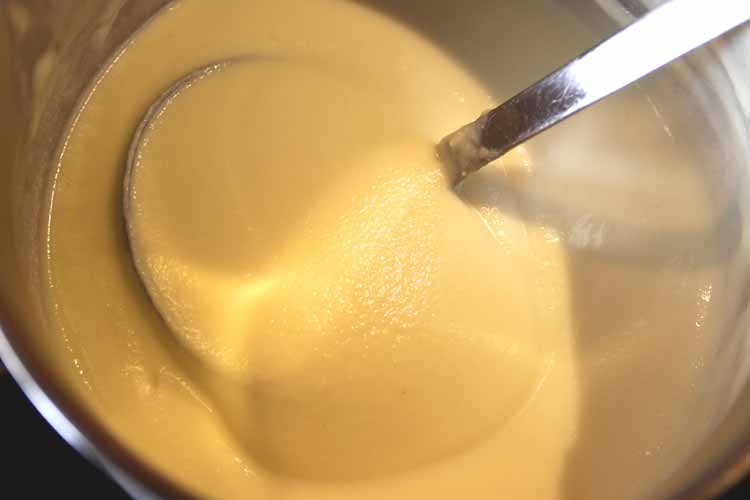
After liquidising, the celariac soup should be beautifully smooth
click to enlarge

You will need

Saucepan
Hand-held or small stand-alone liquidiser
Bowl

Making the Celeriac soup

Trim the celeriac and remove the outer layer of skin. You only want the white flesh. Take care, since this veg is a tough old thing and needs a sharp knife to cut it. Take care of your fingers.

Slice the celeriac into 2cm cubes. Hint: If there’s likely to be a delay between cubing the celeriac and starting to cook it, cover the cubes in a bowl of water with some lemon juice to stop the celeriac turning brown.

Melt the butter in a large pan, add the celeriac and stir with a wooden spoon to ensure everything is covered with butter.

Cover the pan and cook gently over a low to medium heat (don’t burn the butter) for 10 minutes, stirring every two minutes to keep everything covered in butter.

After these ten minutes are up, add enough stock to cover the celeriac and cook over a medium heat until the celeriac is just soft.

The Celaraic soup before the ‘dollop’ of crème fraiche is added
click to enlarge
Remove the pan from the heat and allow it to cool a bit before liquidising really well. If it’s too thick for the liquidiser, add more stock or fresh milk.

Provided you’ve liquidised it well there’s no need to sieve this soup.

Return it to the heat and add salt as required. You may be surprised how much is needed but you’ll know when it’s just right – it’s obvious.

Don’t add pepper. The black specs will spoil the look.

Serving the Celeriac soup

Pour the soup into a clean pan and reheat – do not boil – and add the double cream. Stir well and check if it needs any more salt.

Finally, check the consistency is right. Add more stock or milk to thin, or keep on the heat to thicken.

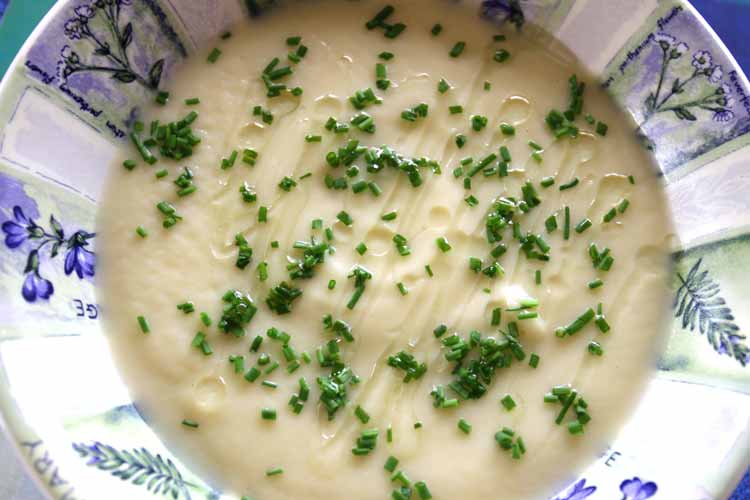
Pour into warm bowls and add a sprinkling of chopped chives and a drizzle of truffle oil on top.

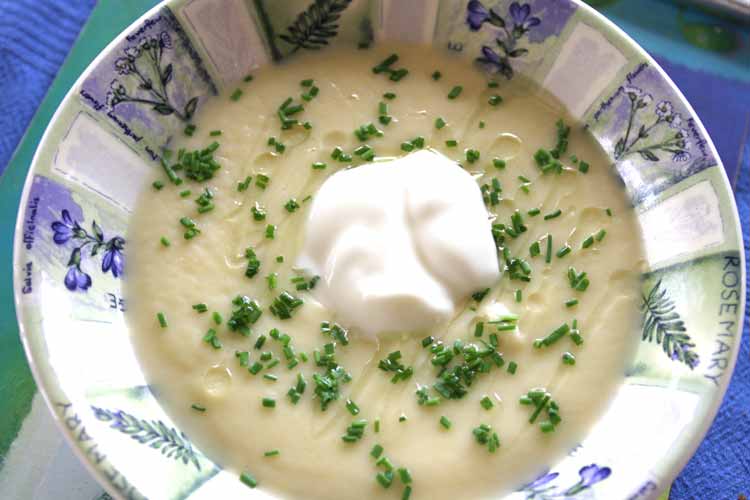
Chives, truffle oil and the ‘dollop’ of crème fraiche just make this soup
click to enlarge

Finally, place a small dollop (a Play d’eau technical term) of crème fraiche on the top of each serving.

Each person should have six Soldier Croutons.

Additional touches

As with most soups, leaving them in the fridge to ‘mature’ brings a greater depth of flavour. Keeps well in the freezer.

This soup is also great as an Amuse Bouche, served either hot or cold without the croutons.

Coming soon…
  • Poached eggs that look so good
  • Vinaigrette dressing using a raspberry vinegar

Piers and Lin
from the Galley of
Play d’eau
Fleming 55

You can get in touch with us any time by using our Contact Form.

Squash and Ginger soup

Squash and Ginger soup ready to be devoured
click to enlarge

The clue to this beautiful soup lies in its simplicity and flavour maximising. Although the amount of ginger may sound excessive, I assure you it isn’t. It’s just gorgeous.

For the soup – at least 6 servings

1 Large Butternut Squash
200gm Salted butter
½ ltr Vegetable stock
8cm x 2 cm Fresh ginger
Sea salt

For serving

Crème Fraiche
Finely chopped Corriander
Crouton Soldiers

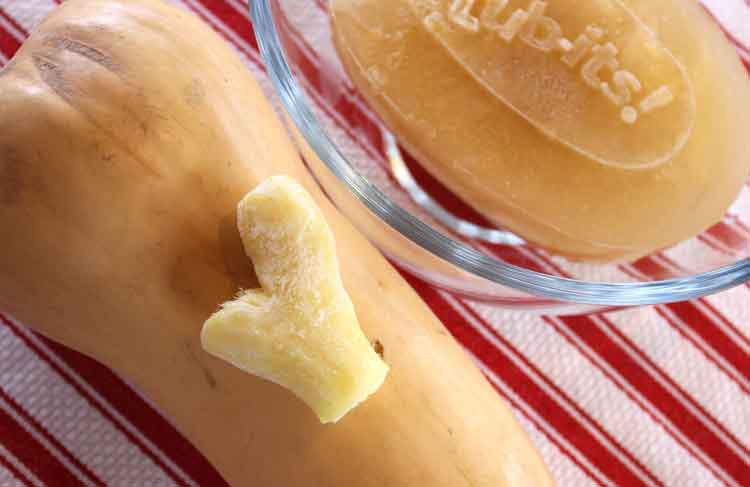
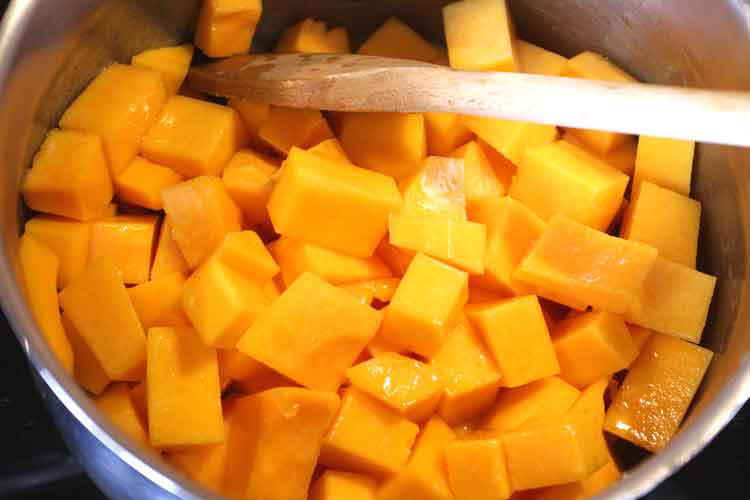
Squash, Ginger, and vegetable stock
click to enlarge


You will need

Saucepan
Hand-held or small stand-alone liquidiser
Cheese grater or a coarse Microplane
Bowl

Making the Squash and Ginger soup

Slice the squash into 2cm ‘wheels’. Cut the skin off, and, using a teaspoon, remove all traces of seeds and membrane.

Using the same teaspoon, use the edge to scrape the skin off the ginger.

Cut the squash wheels into 2cm x 1cm pieces.

The squash cut into 2cm wheels
click to enlarge

Slice the ginger thinly, or grate it if you’ve kept it in the freezer. (Note: keeping peeled ginger in the freezer is a really good idea. It keeps for ages and can be grated easily whilst frozen)

Melt 150gm of butter in a large pan, add the squash and ginger and stir with a wooden spoon to ensure everything is covered with butter.

Cover the pan and cook gently for 10 minutes, stirring every two minutes to keep everything covered in butter.

After these ten minutes are up, add just enough stock to cover the squash and cook until the squash is just soft.

Remove the pan from the heat and allow it to cool down a bit before liquidising really well. If it’s too thick, add some more stock or fresh milk. Provided you’ve liquidised it well there’s no need to sieve this soup.

Serving the Squash and Ginger soup
The Squash and Ginger, basted with butter, before the stock is added
click to enlarge

Pour the soup into a clean pan and reheat – do not boil – and add the rest of the butter. Stir well, adding salt to taste. (Note: don’t add pepper since it’s black specs will detract from the look of the soup)

Pour into warm bowls.

Place a small dollop (a Play d’eau technical term) of crème fraiche on the top of each serving and a small sprinkling of finely chopped coriander.

Each person should have six Soldier Croutons.

Additional touches
  • Once liquidised, allow the soup to develop its flavour in the fridge for 24hrs – if you can wait that long!
  • Drizzle some Truffle Oil on each serving before adding the coriander. Brings a earthy depth

This soup is also great as an Amuse Bouche, served either hot or cold without the croutons. Keeps well in the freezer.

So, so simple, yet so, so beautiful.

Piers and Lin
from the Galley of
Play d’eau
Fleming 55

You can get in touch with us any time by using our Contact Form.
Vegetable Stock

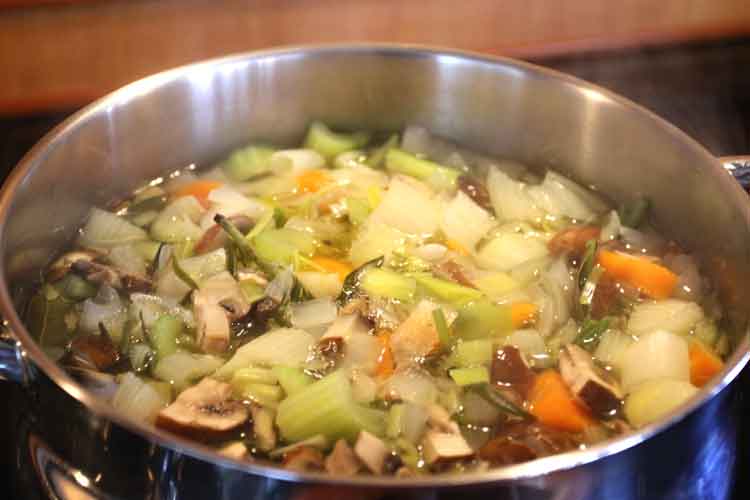
All ingredients trimmed, peeled and chopped
and in the pot
click to enlarge

Stock forms the basis of so many good onboard recipes, and the good news is you only really need vegetable stock. No chicken or meat stock, just vegetable.

Our recipe has been refined over the years and never lets us down and produces a gorgeous concentrated stock which works brilliantly with many of the recipes we’ll be adding as time goes by.

It’s packed with flavour and keeps really well in the fridge for a good three weeks and almost for ever in a freezer. It also scales well if you want to make less or more at a time.

So please don’t use stock cubes or any other form of instant stock which all pale into insignificance in comparison.

Vegetable Stock

Ingredients

6 Carrots
3 Large leeks with as much white as possible
2 Small fennels
3 Small onions
2 Parsnips
8 Button mushrooms
3 Celery stalks plus the very small leaves close to the stalks
Small bunch of Parsley stalks (no leaves)
Rosemary (some)
Pepper corns (say 30)
Bay Leaves (a few)
Thyme (some)

Simmering gorgeousness.
Leave for 2 hours or more
with the lid on but just cracked open
click to enlarge

Technique

The ‘Dos’ and ‘Don’ts’ of brilliant stock making.

  • Do peel and trim the vegetables as if you were going to eat them
  • Don’t let the stock boil, just simmer
  • Don’t use the dark green parts of the leek
  • Don’t squeeze or mash the vegetables to extract extra liquor
  • Don’t add salt. Instead, add salt when creating the final dish
You’ll need

A large saucepan with a lid (in which to make the stock), a smaller saucepan into which to strain the stock, kitchen knife, wooden spoon, sieve, clean muslin or dish cloth, storage containers (half litre recommended) for the finished stock.

Making perfect veg stock

Clean, peel and trim the vegetables. Cut them into half inch squares or smaller and put them in the pot. Clean and slice the mushrooms and add them to the pot with the herbs and pepper. Add water to half an inch below the top of the vegetables.

Bring to the simmer, making sure the herbs are underneath the surface (use the wooden spoon). Keep it simmering for two or more hours.

Keep the lid on the pot, but just cracked open to allow some of the steam to escape.

You’ll find the vegetables start to shrink allowing the water to cover them. If you need to add a bit more water, only add enough to keep the vegetables just covered.

When cool, strain the liquor through the sieve and muslin (or tea cloth) into another pan. Let it drain – don’t squeeze the remaining vegetables.

Finally, pour your stock into containers and use as and when needed. You’ll have about 1.5 ltrs of strong concentrated stock which can be diluted as required.

Perfect!

Piers and Lin
from the Galley of
Play d’eau
Fleming 55

You can get in touch with us any time by using our Contact Form.
Cooking onboard

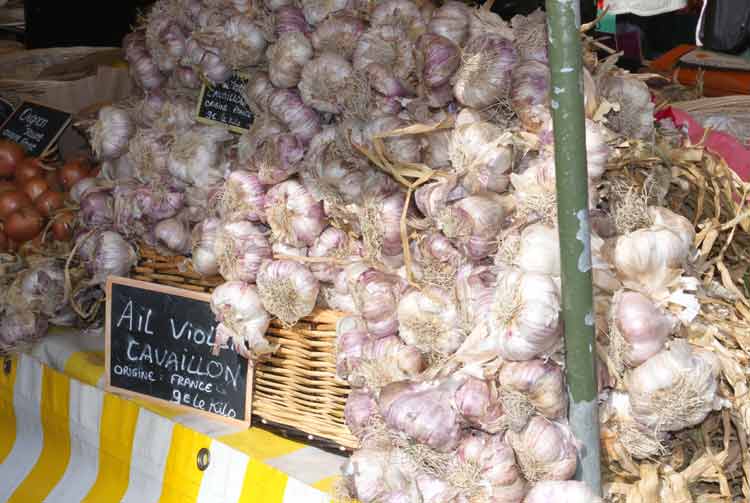
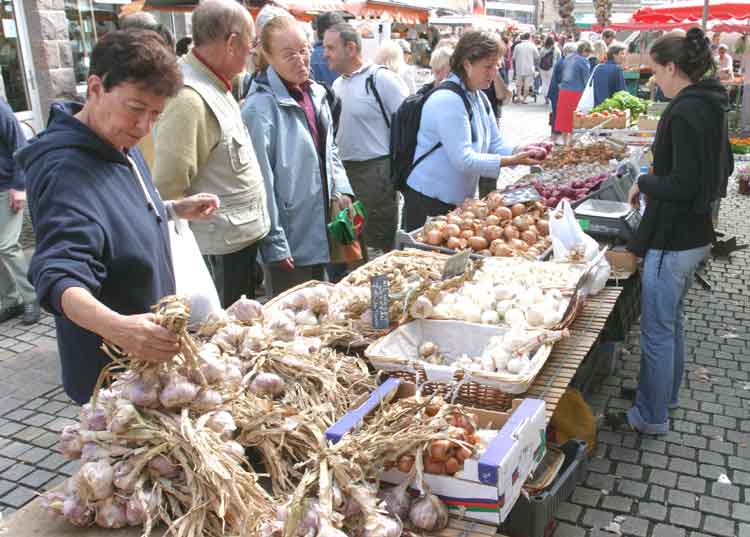
Rose (violet) garlic, the best of all garlics,
at Paimpol’s farmers’ market, Brittany
click to enlarge
Eating out appears to be the choice of many boaters rather than cooking onboard. Whilst away, it’s a holiday in itself not to have to cook but we sometimes we come away disappointed with the fare we’ve been served.

Despite the ‘effort’ involved, preparing an exciting meal onboard, full of mouthwatering flavours can be such fun and so rewarding.

I mean, after you’ve moored up and decide to go exploring on foot, search out the world of the local farmers’ markets and supermarkets and explore their great produce. In France especially, you are spoilt for choice with seafood galore, vegetables, cheeses, speciality vinegars, wines, breads – just smell the aromas. Is your mouth watering yet?

Making it fun to cook onboard

Over the years, Lin and I have developed some specific solutions to cooking onboard and making great food. So we’ve decided to share this by adding Cooking posts to get you going.

We’ll start soon by adding posts under a new ‘Cooking’ category on quick and easy ‘wow’ goodies such as Parmesan cheese crisps before becoming more adventurous. We’ll also be adding ‘food goodies’ when we come across good sources at the various ports we visit and, when we want a break and really don’t want to cook, we’ll add comments about the restaurants we visit and recommend – or otherwise.

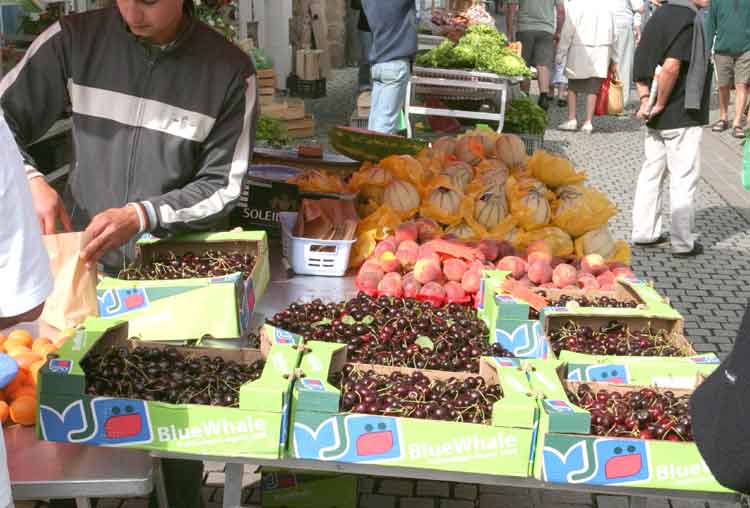
Cherries, peaches, melons….
whatever you want at one of the many fruit stalls
click to enlarge
So, if you use any of our ideas and find you like your initial creations, do keep going. Much is about simple technique and preparation with nothing too complicated or time consuming.

Keep going!

As I’ve said, we’ll start with simple ‘nibbles’ which go really well with early evening drinks. If they work for you, you can then decide to start climbing the ladder with our starters, main courses and finally, desserts.

Our experience is that there’s nothing like sharing an on-board prepared meal with newly found boating friends from neighbouring berths.

Wine, conversation and laughter all flow amidst the high praise the chef receives.

Best of Breed ingredients

We will keep our Best of Breed ingredients page updated as and when we find worthy and outstanding products.

Something to share?

If you’ve found a recipe that works for you onboard, please send it to us and we’ll publish it for you. Whether it’s simple or complex, let’s get cooking!

Inspiration

We’re often asked where our inspiration for cooking comes from. Lin’s been cooking brilliantly for many years, but for Piers, it wasn’t until he attended a five day course at the Ashburton Cookery School accompanied by Kim Hollamby, that his love of cooking took off.

So, to whom do our thanks go?

Piers and Lin
from the Galley of
Play d’eau
Fleming 55

You can get in touch with us any time by using our Contact Form.

Dried meats, hams and sausages, anyone?
click to enlarge
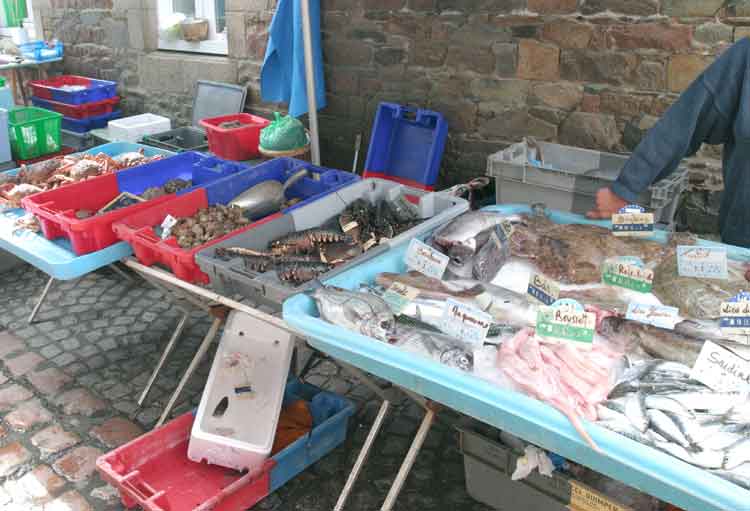
Seafood galore
straight from the sea that morning
click to enlarge
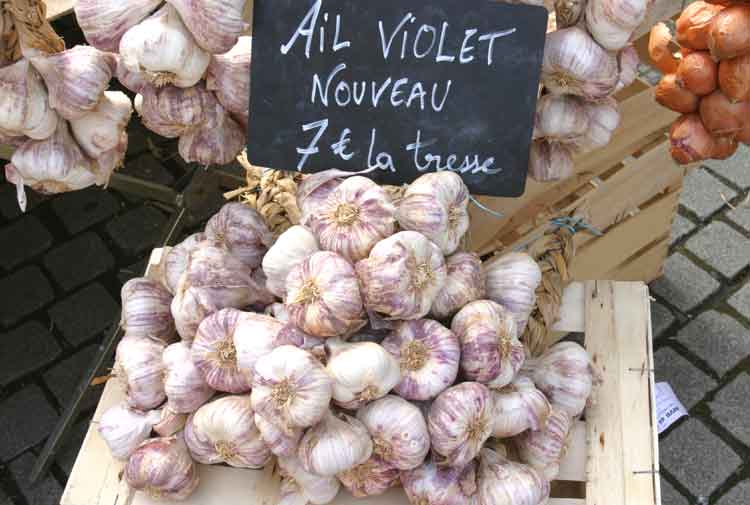
Onions, shallots, garlics….
click to enlarge
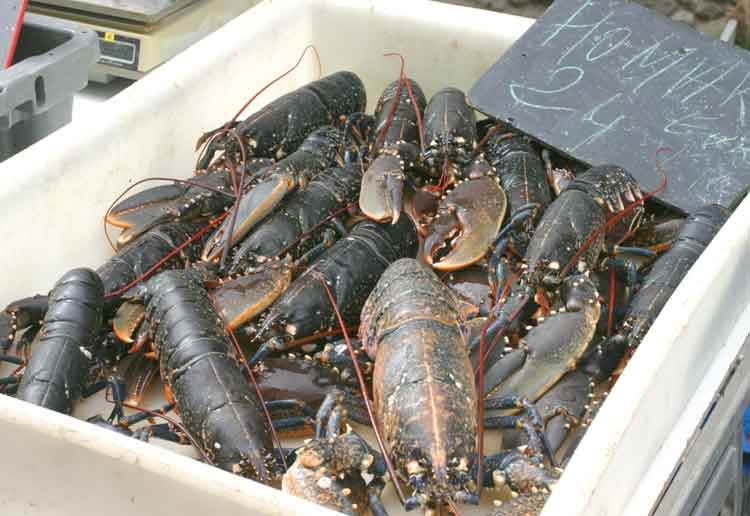
….and Lobsters just waiting to nip you!
click to enlarge

Latest cooking onboard posts

[catlist id=4 numberposts=20]