Robin of RES replaces the GPS1 aerial of the Furuno satellite compass click to enlarge
Bugs – the bane of Play d’eau’s new Pilot House electronics. Can we really exterminate them?
I remember seeing mother-in-law size cockroaches in Delhi years ago in my flying days. There’d been a flying ant swarm and cockroaches, led by these five inch monsters with their armour plated backs, had come out with their armies to hoover a three Michelin star dinner.
In the airport terminal, some local lads were playing football with them but despite severe kicking and smacking against walls, these monster cockroaches just picked themselves up and carried on scurrying about searching for ants as though nothing had happened. They refused to be exterminated.
We now had a monster somewhere in the electrickery on Play d’eau.
Andy Craig of MEI
Andy Craig of MEI had come to Beaucette Marina on 1st May 2013 and resolved all our electronic woes – or so we all thought.
A few days later, a friend had come from the UK to see us, and in the middle of demonstrating (code for showing off!) our new pilot house equipment, the dreaded ‘Heading Data Missing’ alarm on the nn3d re-appeared with the associated ‘Steering Compass Missing’ warning on the Simrad autopilot, activating every possible audible alarm from the Chart Plotter, Radar, Instruments, and this time, from the Satellite Compass as well which also displayed an ‘Aborting’ message.
Arrrgh! An unknown mother-in-law cockroach had crawled out to mock us.
The GPS1 aerial works again, with the same HDOP as the other two aerials in the array click to enlargeAfter re-booting the satellite compass many times, I called Andy of MEI. Having listened to my woes, Andy’s gentle voice came back with, ‘You won’t believe this, Piers. We’ve just had a Tech Bulletin from Furuno advising us there’s a potential fault in the GPS aerials they use in their satellite compass. From what you’ve said, the GPS1 aerial has failed which could have been the source of all the original problems.’
Robin of RES (Guernsey)
In the moments that followed, Andy spoke with the warranty desk at Furuno which immediately accepted the warranty claim, arranged for a spare aerial to be despatched from Holland direct to RES (their authorised agent in Guernsey) and authorised them to effect the repair. How brilliant was that!
Yesterday, Robin of RES appeared on Play d’eau and checked the fault remained. It did. Climbing the radar arch and pony mast, Robin unscrewed the cover from the aerial array, removed and replaced the faulty aerial and appeared back in the Pilot House to check it was now working. It was. Brilliant, again.
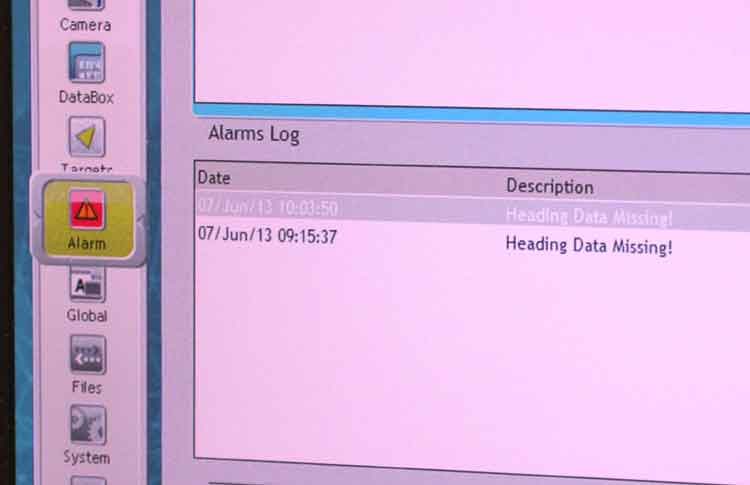
One mother-in-law cockroach exterminated. The dreaded Heading Data Missing alarm returns to the nn3d which will be hunted down and exterminated click to enlarge
Any more bugs?
Yes. Two hours later, three more bugs dared to surface. The original ‘Heading Data Missing’ on the nn3d, and two relatively new ones showing as ‘Log’ and ‘EPFS’ in the Radar alarm log. Yet all with no indication of equipment failure.
To me, I don’t believe there’s anything more wrong with any of the equipment. Deduction tells me these bugs are more like mosquitoes hiding in the sentences being dropped onto the nn3d backbone or the speed at which they are talking. A mismatch or confusion somewhere. Time will tell.
So, having exterminated a cockroach we now have three mosquitoes.
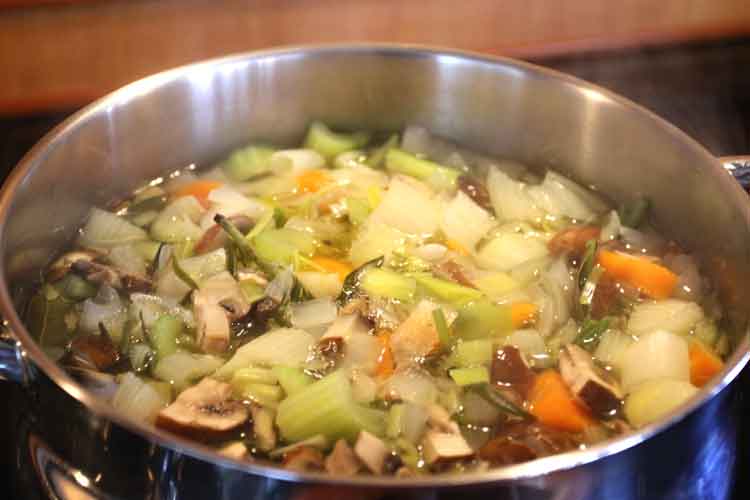
All ingredients trimmed, peeled and chopped and in the pot click to enlarge
Stock forms the basis of so many good onboard recipes, and the good news is you only really need vegetable stock. No chicken or meat stock, just vegetable.
Our recipe has been refined over the years and never lets us down and produces a gorgeous concentrated stock which works brilliantly with many of the recipes we’ll be adding as time goes by.
It’s packed with flavour and keeps really well in the fridge for a good three weeks and almost for ever in a freezer. It also scales well if you want to make less or more at a time.
So please don’t use stock cubes or any other form of instant stock which all pale into insignificance in comparison.
Vegetable Stock
Ingredients
6 Carrots
3 Large leeks with as much white as possible
2 Small fennels
3 Small onions
2 Parsnips
8 Button mushrooms
3 Celery stalks plus the very small leaves close to the stalks
Small bunch of Parsley stalks (no leaves)
Rosemary (some)
Pepper corns (say 30)
Bay Leaves (a few)
Thyme (some) Simmering gorgeousness. Leave for 2 hours or more with the lid on but just cracked open click to enlarge
Technique
The ‘Dos’ and ‘Don’ts’ of brilliant stock making.
Do peel and trim the vegetables as if you were going to eat them
Don’t let the stock boil, just simmer
Don’t use the dark green parts of the leek
Don’t squeeze or mash the vegetables to extract extra liquor
Don’t add salt. Instead, add salt when creating the final dish
You’ll need
A large saucepan with a lid (in which to make the stock), a smaller saucepan into which to strain the stock, kitchen knife, wooden spoon, sieve, clean muslin or dish cloth, storage containers (half litre recommended) for the finished stock.
Making perfect veg stock
Clean, peel and trim the vegetables. Cut them into half inch squares or smaller and put them in the pot. Clean and slice the mushrooms and add them to the pot with the herbs and pepper. Add water to half an inch below the top of the vegetables.
Bring to the simmer, making sure the herbs are underneath the surface (use the wooden spoon). Keep it simmering for two or more hours.
Keep the lid on the pot, but just cracked open to allow some of the steam to escape.
You’ll find the vegetables start to shrink allowing the water to cover them. If you need to add a bit more water, only add enough to keep the vegetables just covered.
When cool, strain the liquor through the sieve and muslin (or tea cloth) into another pan. Let it drain – don’t squeeze the remaining vegetables.
Finally, pour your stock into containers and use as and when needed. You’ll have about 1.5 ltrs of strong concentrated stock which can be diluted as required.
Perfect!
Piers and Lin
from the Galley of Play d’eau
Fleming 55
You can get in touch with us any time by using our Contact Form.
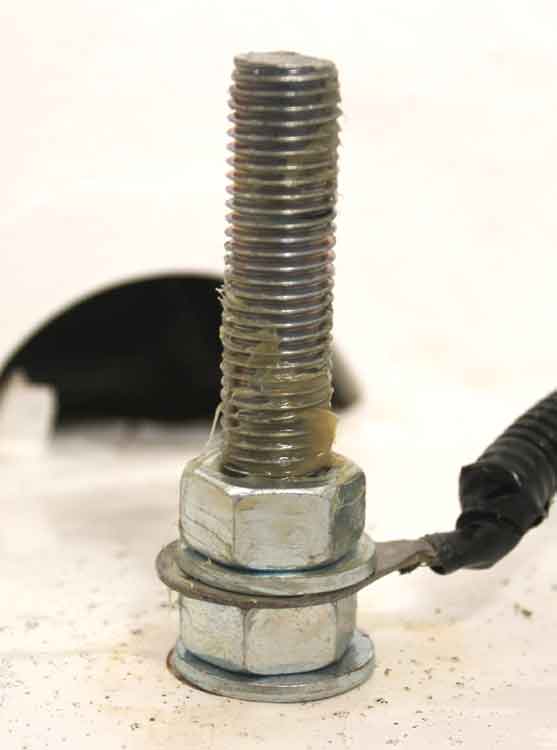
The offending anode bolt was knocked out click to enlargeIn cleaning the bilges I’d found a slight weep from one of the four bolts used to secure the two main anodes to the hull. Its washer was rusted leaving a slight rust stain where water must have oozed from the bolt and dribbled into the bilge. The concern was if the hull was wet from the water ingress.
Up, up and away
On Monday at 1630, Play d’eau took the short cut from Beaucette Marina to St Sampson’s and went up in the world as she was lifted by M&G Engineering in their 75 ton hoist to have the offending anode bolt knocked out, the hull checked for moisture content and a new bolt bedded in.
At the same time, we would take advantage of the lift to check the anodes and clean the trim tabs which had grown the most magnificent, yet embarrassing, seaweed beards.
The offending anode bolt
The offending bolt was knocked out and thankfully, it was clean and bright with no sign of any water ingress at all. It appears that the washer had had its anodising scratched as its nut was tightened causing it to corrode in the salty atmosphere of the bilge. Knowing the integrity of the hull had therefore not been breached, we wouldn’t have to suffer the expense of keeping Play d’eau on the hard for days if not weeks to dry out. What a relief.
Note 1 to self: Cover the exposed nuts and bolts on the inside of the bilge with white grease to prevent a return of worrying corrosion. The new bolt, greased up to prevent corrosion recurring click to enlarge
Play d’eau’s other anodes
When Play d’eau was lifted in February we checked all 12 anodes and it was only the two prop shaft anodes which needed changing.
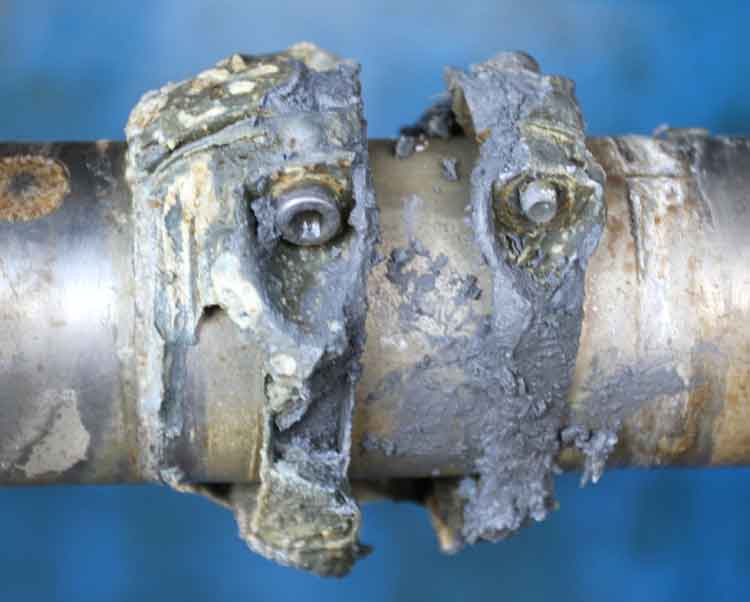
And now with her in the strops, all looked OK except for the two on the prop shafts. After just four months they’d almost been completely eaten away which was most unusual. Maybe the reason for the rapid erosion was that we’d used MG Duff’s new aluminium anodes rather than zinc, as M G Duff had recommended.
Note 2 to self: If aluminium was the reason the shaft anodes had worn so quickly, I must use twin anodes or more on both shafts to get a full year’s use out of them – or better still, find zinc anodes again.
The Beard
The hull looked really good with almost no hint of fouling at all. But the trim tabs were another story. They were sporting a truly magnificent full set of whiskers.
The reason for this became evident when they were removed; the anti-fouling had been flaking off leaving bare metal. Far too much of a temptation for the Beaucette Marina seaweeds.
Note 3 to self: Next lift-out, take the trim tabs back to bare metal and start again.
Happy cruising!
Piers
from the Engine Room of Play d’eau
Fleming 55
In just four months the trim tabs had grown magnificent beards of Beaucette seaweed click to enlarge
It looked so beautiful, but it had to come off click to enlarge
The aluminium anode on the port prop shaft had virtually gone in only four months click to enlarge
The aluminium anode on the starboard prop shaft had almost disappeared completely click to enlarge
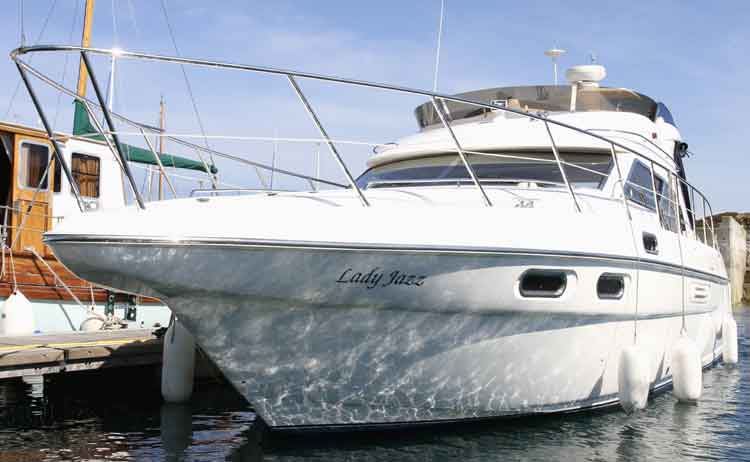
Lady Jazz, Sealine F43, owned by Bernie and Lynn click to enlargeLogging into ybw.com a week ago to catch up with news on the Motor Boat Forum, I found ‘Thepipdoc’ had come into Beaucette Marina the previous evening on one engine having had an engine failure part way across the English Channel.
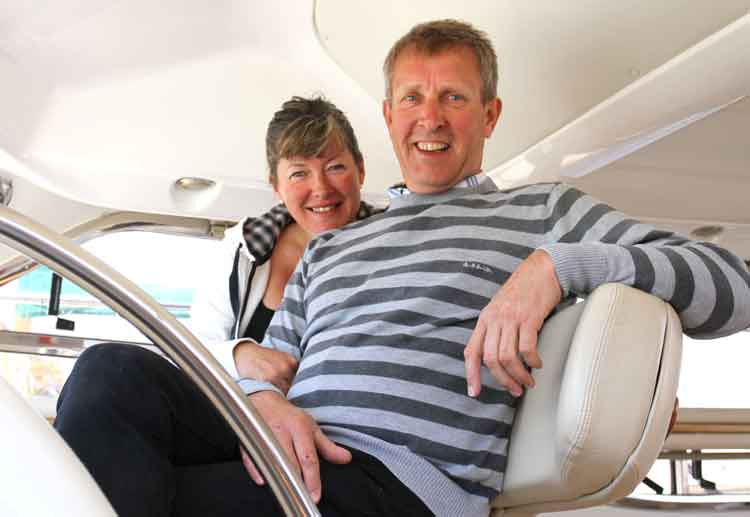
Wandering around to his berth from Play d’eau the next morning I found Lady Jazz, a gleaming Sealine F43, and met Bernie and Lynn. Bernie, who had only just woken up (it was 9 o’clock already!) told me, ’12 miles north of Beaucette Marina the starboard engine conked out and we slowed to 9 knots. At this speed we were rolling around a bit and the last thing I wanted to do was poke around the engine room so we carried on to Beaucette Marina where Ricky (Marina Manager) came out and guided us in.’
Bernie carried on to tell me that the starboard engine’s Racor filter bowl looked a murky grey, that the starboard tank was only a quarter full and that fuel additives had not been used in the one and a half years Bernie had owned Lady Jazz. This seemed to point to a potential diesel bug problem. Changing the Racor filter click to enlarge
Changing the Racor filter
Later that morning, Bernie changed the Racor filter, bled as much air from the system as possible and after a good cranking the engine started and ran perfectly at 2,000 rpm for 20 minutes. All appeared good news so Bernie cast off to motor the short distance to St Sampson’s harbour to fill up with diesel delivered by a Rubis tanker.
But one mile out of Beaucette Marina, Lady Jazz’s starboard engine failed again leaving Bernie to limp into St Sampson’s where he changed the starboard engine’s fine filter just in case that was blocked as well. Cranking the engine to bleed air from the system, it started. Success? Sadly no. Ten minutes later it began hunting, and stopped.
Confined to the engine room
So, with fuel in the tank, clean Racor and fine filters, something else had to be happening.
Spending the next two days in the engine room, Bernie swapped the fuel supply pipes to see if the port engine would run from the starboard tank. It did. So the tank and its immediate pipework to the starboard fuel shut-off valve was good.
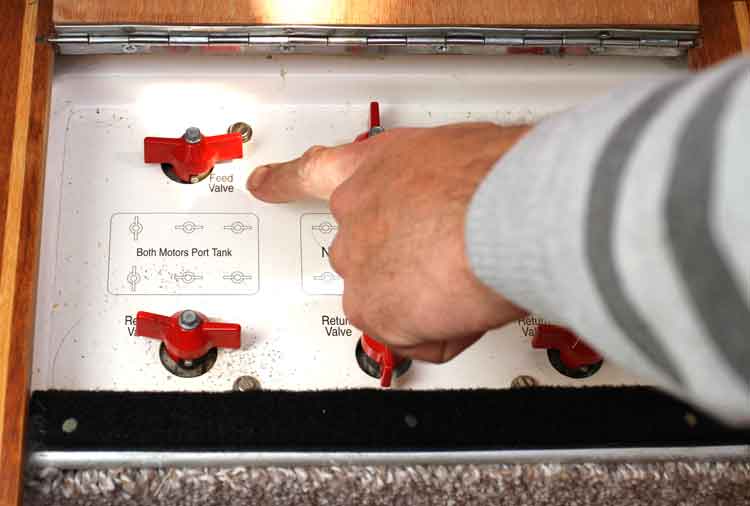
So by deduction, there had to be an obstruction somewhere between the starboard fuel shut-off valve and the starboard engine’s Racor filter.The offending fuel shut-off valve which had to be removed and disassembled click to enlargeUsing a foot pump and a Pela suction pump on the potentially offending length of pipe, Bernie (annoyingly) found it was clear. But thinking about it, that could mean only one thing – the problem had to be with the shut-off valve itself.
That’s the culprit
Having disconnected the fuel valve assembly board completely from its associated pipework and been covered in diesel whilst doing it, Bernie attacked the valve. Lo and behold, it was jammed with something looking like material which took an age to pick out. Was it a bit of rag? Was it a cigarette butt?
But having re-assembled the board, the engine wouldn’t start. It wouldn’t even crank. Why? With constant cranking over the last few days, the started motor had burned out.
At this point, St Sampson’s Marine and General stepped up to the plate and in no time at all had provided a new starter motor at almost the same cost as a rebuild. Perfect!Problem resolved, Lynn and Bernie can enjoy the rest of their holiday click to enlargeWith the new started fitted, the fuel shut-off valve cleaned out, all eight pipes of the fuel valve assembly board reconnected, fuel in the tanks together with a good dose of Grotamar 82 additive, the starboard engine was obviously relieved and burst into life.
The rest is history.
Piers
from the Engine Room of Play d’eau
Fleming 55
You can get in touch with us any time by using our Contact Form.
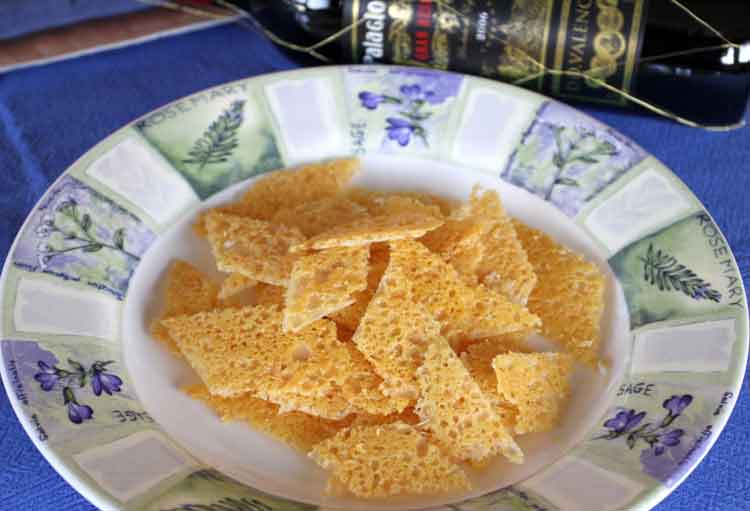
Parmesan Diamond crisps They’ll go as fast as you can serve them! click to enlargeThese Parmesan Diamond crisps are so, so more-ish. Great with drinks and they’ll disappear the moment you serve them amidst many ‘wows’ of praise.
Ingredients
75gm Parmesan (Parmigiano-Reggiano to give it its correct name)
75gm Grana Padano cheese
Optional – sesame or poppy seeds for a final dressing
Technique
The ‘Dos’ and ‘Don’ts’ of making Parmesan crisps.
Do use both types of cheese – Parmesan only is too strong
Don’t use ready grated cheese – it just doesn’t work
You’ll need
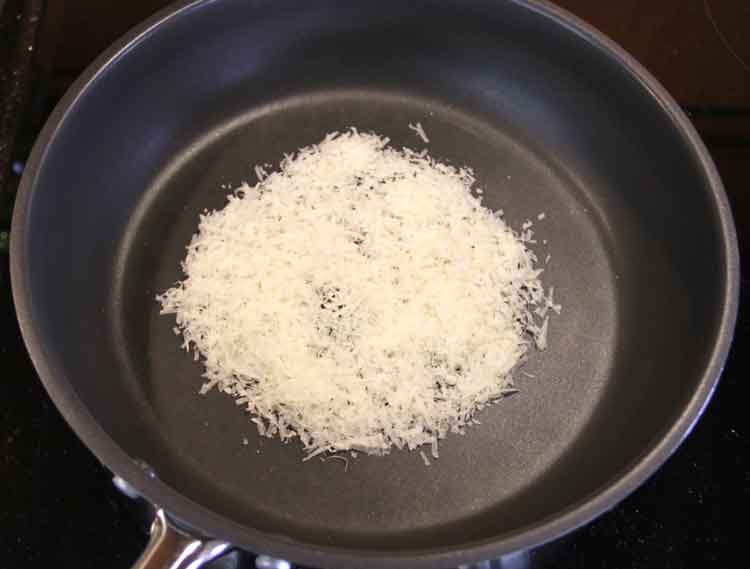
Form a 1cm deep round leaving a 5cm margin around the edge of the pan click to enlargeCheese grater, dinner plate or small bowl, non-stick frying pan, kitchen paper, spatula, kitchen knife, chopping board.
Making Parmesan Diamond crisps
Grate the two cheeses onto the dinner plate. Using your fingers, gently mix them up.
Sprinkle the grated cheese onto the frying pan to form a 1cm deep round leaving a 5cm margin around the edge of the pan. Tamp it down just a bit.
Place on a low to medium heat.
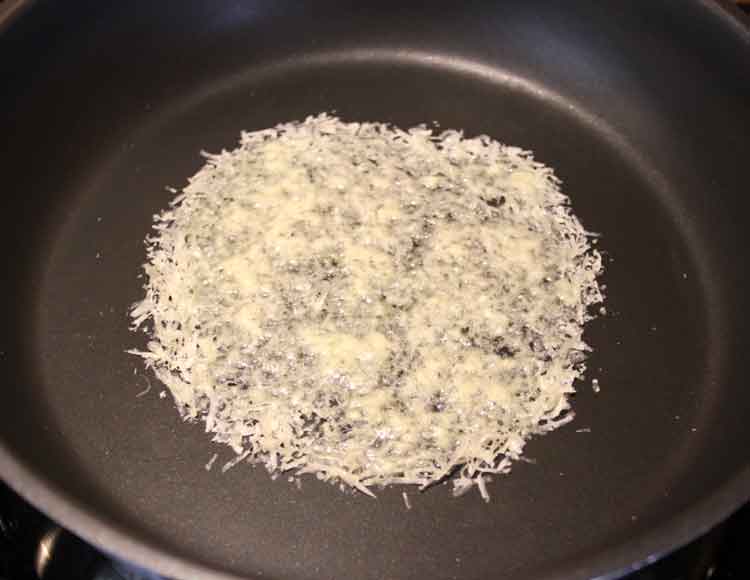
After a while you’ll see the cheese start to melt, then bubble, and the edges will start turning a light brown.
If you want to flavour the crisps, add a sprinkling of the seeds at this stage.
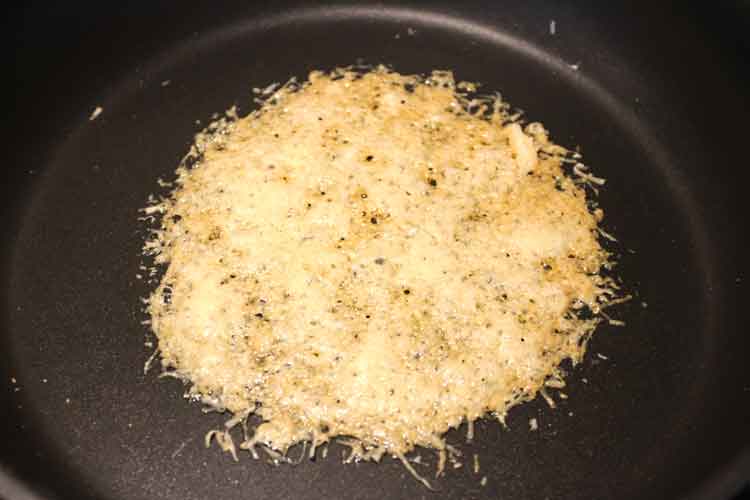
Keep going and wait until the bubbling has almost stopped.The cheese will start to melt, then bubble, and the edges will start turn a light brown click to enlargeRemove the pan from the heat and place it on a heat resistant surface.
After a minute or so, the pan will have cooled a bit but the crisp will still just be pliable. Slide a spatula around the outside of the crisp and gently prise it out of the pan.
Place it on kitchen paper for a few moments to remove any excess oils before moving it to a chopping board.
Slice it into 4cm strips and slice again, diagonally to form your Parmesan Diamond crisps.
To keep their crispness, eat them soon after making. Mind you, as quickly as you serve them they’ll go!
Perfect!
Let us know how you get on – you can get in touch with us any time by using our Contact Form.
Piers and Lin
from the Galley of Play d’eau
Fleming 55
Wait until the bubbling has almost stopped before taking the pan off the heat click to enlarge
Remove from the pan and place the crisp on kitchen paper to remove excess oils click to enlarge
After much encouragement, Lin and I have decided to add a section on ‘Cooking onboard‘.
The first recipe will be Parmesan Diamond crisps which are really simple to make and so rewarding.
Over time, we’ll share the good – what we’ve learned works really well; the bad – which encompasses the limitations of a boat’s galley and how we overcome them; and finally the ugly – dedicated to what not to do!
We also intend to add comments on any restaurants we eat at during our cruising adventures.
Have fun, and let us know how you get on.
Piers and Lin
from the Galley of Play d’eau
Fleming 55
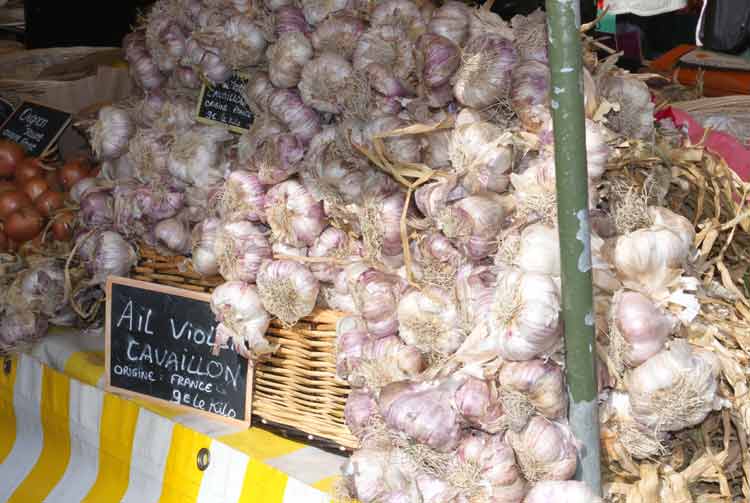
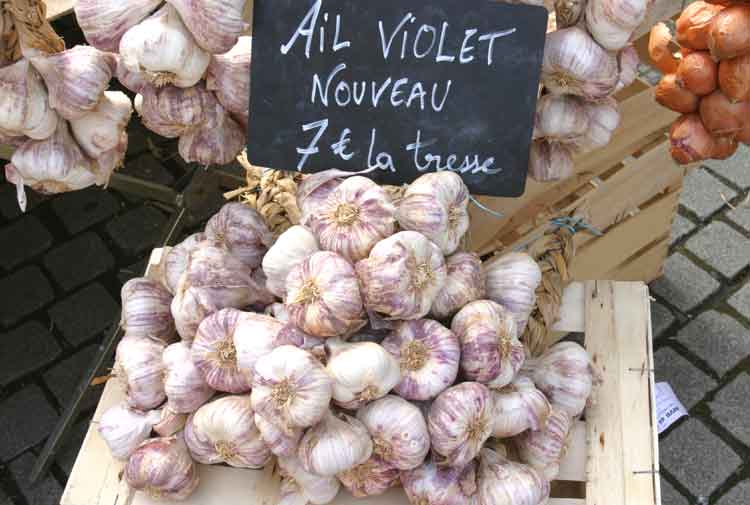
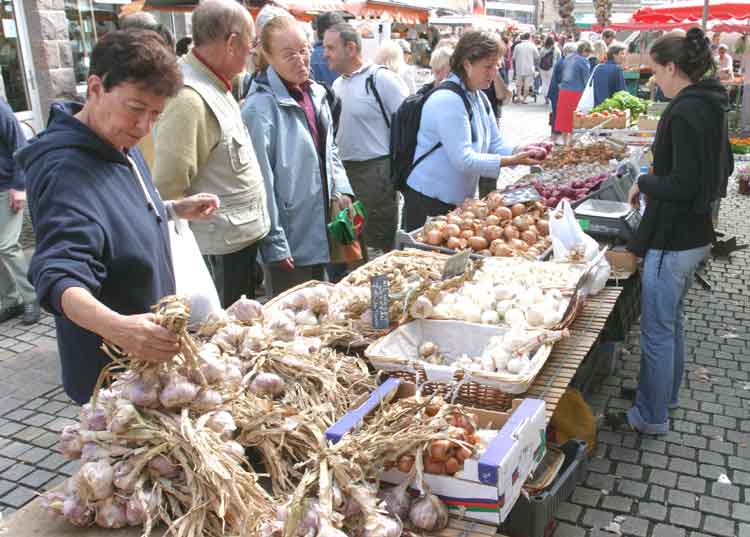
Rose (violet) garlic, the best of all garlics, at Paimpol’s farmers’ market, Brittany click to enlargeEating out appears to be the choice of many boaters rather than cooking onboard. Whilst away, it’s a holiday in itself not to have to cook but we sometimes we come away disappointed with the fare we’ve been served.
Despite the ‘effort’ involved, preparing an exciting meal onboard, full of mouthwatering flavours can be such fun and so rewarding.
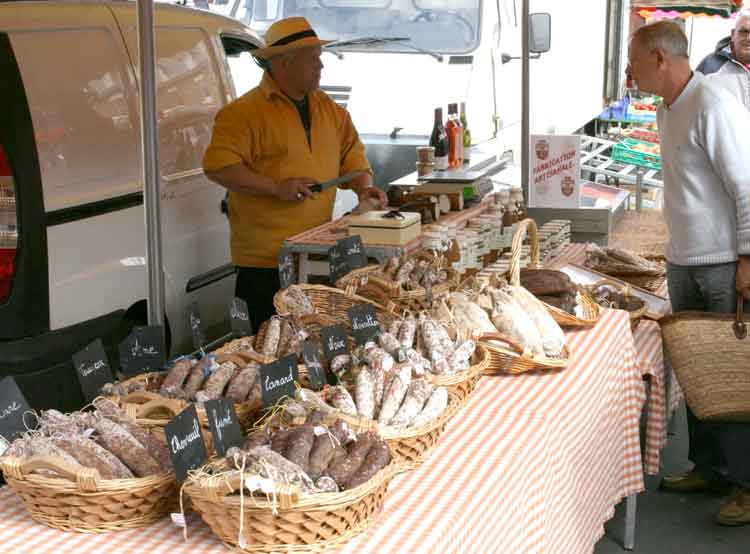
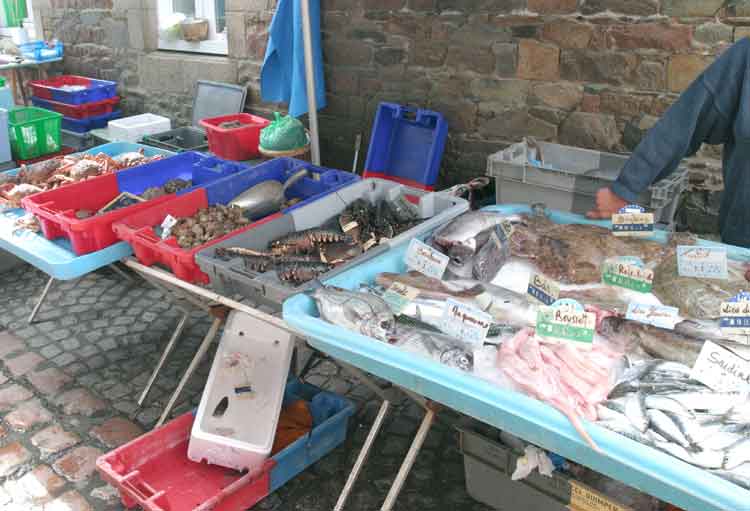
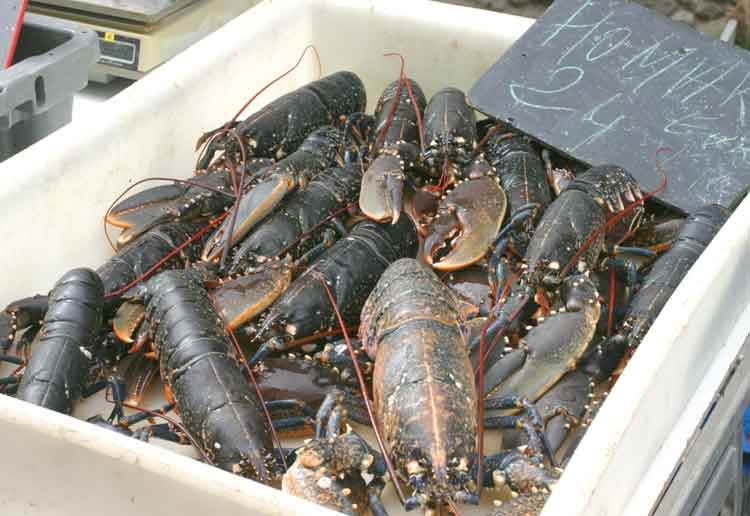
I mean, after you’ve moored up and decide to go exploring on foot, search out the world of the local farmers’ markets and supermarkets and explore their great produce. In France especially, you are spoilt for choice with seafood galore, vegetables, cheeses, speciality vinegars, wines, breads – just smell the aromas. Is your mouth watering yet?
Making it fun to cook onboard
Over the years, Lin and I have developed some specific solutions to cooking onboard and making great food. So we’ve decided to share this by adding Cooking posts to get you going.
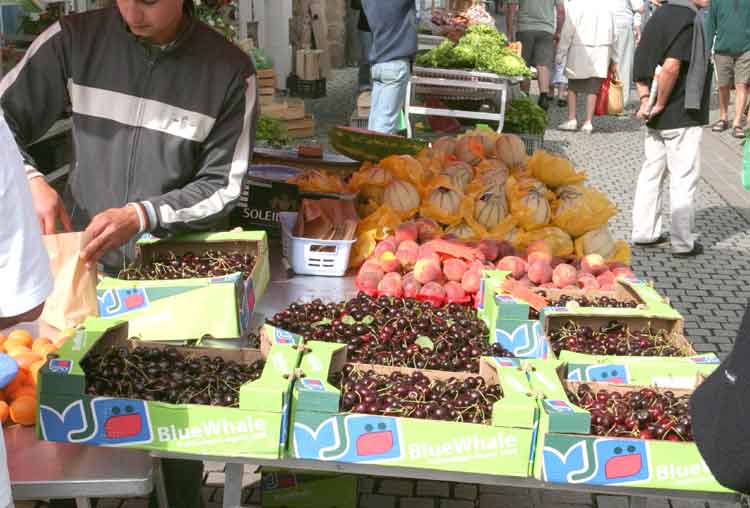
We’ll start soon by adding posts under a new ‘Cooking’ category on quick and easy ‘wow’ goodies such as Parmesan cheese crisps before becoming more adventurous. We’ll also be adding ‘food goodies’ when we come across good sources at the various ports we visit and, when we want a break and really don’t want to cook, we’ll add comments about the restaurants we visit and recommend – or otherwise.Cherries, peaches, melons…. whatever you want at one of the many fruit stalls click to enlargeSo, if you use any of our ideas and find you like your initial creations, do keep going. Much is about simple technique and preparation with nothing too complicated or time consuming.
Keep going!
As I’ve said, we’ll start with simple ‘nibbles’ which go really well with early evening drinks. If they work for you, you can then decide to start climbing the ladder with our starters, main courses and finally, desserts.
Our experience is that there’s nothing like sharing an on-board prepared meal with newly found boating friends from neighbouring berths.
Wine, conversation and laughter all flow amidst the high praise the chef receives.
Best of Breed ingredients
We will keep our Best of Breed ingredients page updated as and when we find worthy and outstanding products.
Something to share?
If you’ve found a recipe that works for you onboard, please send it to us and we’ll publish it for you. Whether it’s simple or complex, let’s get cooking!
Inspiration
We’re often asked where our inspiration for cooking comes from. Lin’s been cooking brilliantly for many years, but for Piers, it wasn’t until he attended a five day course at the Ashburton Cookery School accompanied by Kim Hollamby, that his love of cooking took off.
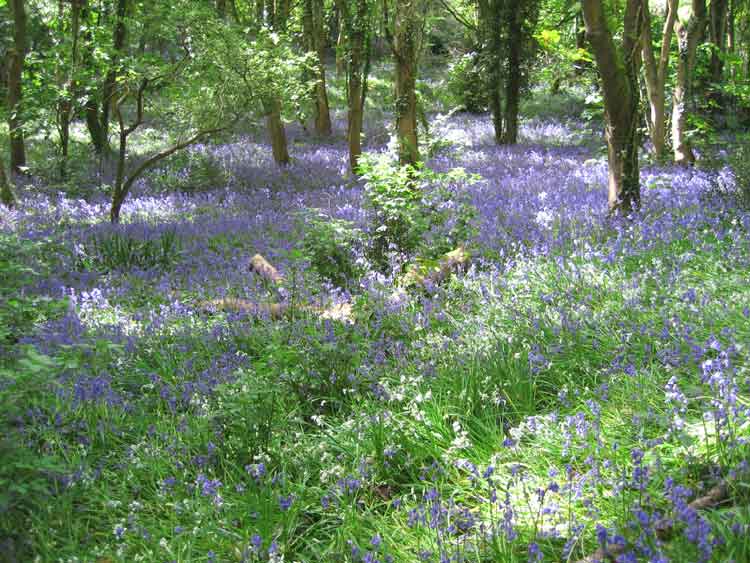
The silent, fairytale Bluebell wood. But where is Mr Tumnus? click to enlargeThree weeks of birthday celebrations finally came to an end on Monday. A totally brilliant time which will need at least a year to recover!
My 65th birthday celebrations! reported the first ten day phase of this extravaganza, which ended on 9 May when the last of our sons with their families, and our dear friends John and Beryl, had all returned to the mainland leaving my sister Hilary and husband Christopher (Kiffer) with us for an eleven day phase 2.
Phase 2
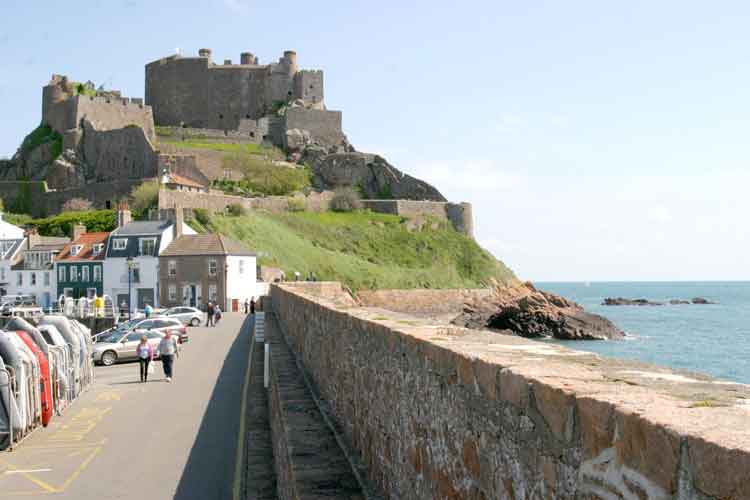
The first six days of phase 2 were bathed in brilliant sunshine during which we explored Guernsey, walked from St Martin’s Point to St Peter Port along the cliff path through the silent, fairytale woods carpeted with blue and whitebells (it was breathtaking – but where was Mr Tumnus?), visited our friends David and Diana in their beautiful bungalow, ate far too much Guernsey butter and ice cream and on my birthday, we had an excellent Sunday lunch at The Restaurant at Beaucette Marina sitting at a window table with gorgeous views across the marina and out to sea.Mont Orgueil Castle, which has been protecting Jersey from French invasion for the last 600 years click to enlargeThen, on 16 May we boarded the Condor Express fast cat with our car bound for Jersey where Lin had decided we should all have a treat and stay in the Royal Yacht Hotel.
As children, we had often spent our family holidays in Jersey so a plan of memory exploration was hatched; we’d start by driving north along the east coast.
Low Tide Fishing
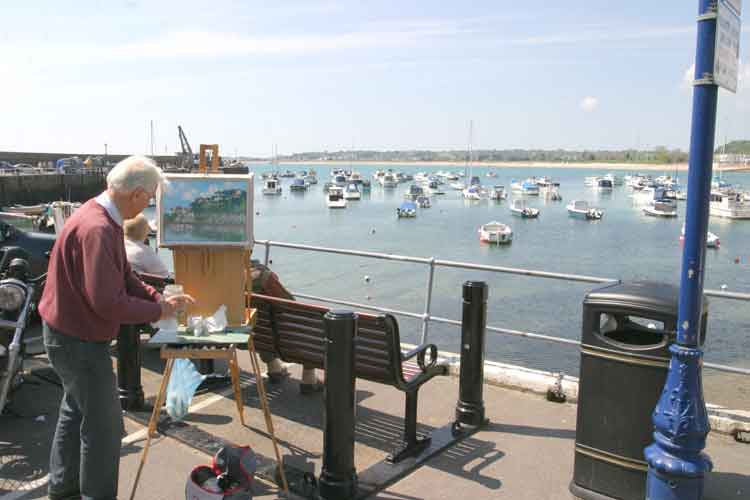
In the 1950s, Dad would take us all low tide fishing. With great excitement, we’d arm ourselves with long bamboo rods with hooks in the end, prawn nets and wicker shoulder baskets and set off from Seymour Slip (Royal Grouville Bay) in the extreme south east, walking way past the two miles offshore, 18th century Seymour Tower chasing the receding tide in time to be at the water’s edge an hour or so before extreme low tide. There, we’d trawl for prawns, hunt crab and lobster under stones and poke under the large boulders with our sticks to see what we could hook out.Looking over the picturesque Gorey harbour whilst a local artist paints the view click to enlargeSoaked to the skin but with baskets full to the brim with bounty kept damp and cool by seaweed, we’d strike back to the shore across sand bars and gullies, careful to ensure the tide didn’t come in so fast it might encircle and cut us off.
Gorey Harbour
One of the most picturesque places in Jersey, Gorey remains a beautiful village and harbour, guarded against invasion by the French for over 600 years by the imposing Mont Orgueil Castle.
Whilst eating another ice cream, Jersey Royals were being harvested on the steep hills immediately behind us.
Archirondel
Further north along the coast road we passed Geoffrey’s Leap (where we used to have cream teas and listen (again and again) to the story behind its name) to Archirondel, a strong family favourite where we’d spend the day swimming, scrunching the pebbles with our heels, exploring the unfinished breakwater, and being rowed around the bay in Dad’s clinker built dinghy, Dodo.Gazing and remembering Hilary, Kiffer and Piers stare into the distance. The white tower of Amy’s slipway on the left click to enlargeAlthough the café is new, the beach and its scrunch remains the same as does the 1792 red and white Martello tower which stands stoically, staring out to sea for the invasion that will never happen.
Amy’s Slipway
Halfway along St Catherine’s Bay is a white Martello Tower and its adjacent slipway, known to us as as Amy’s slipway since it used to be owned by the Amy family.
A good place to swim, but not the best.
St Catherine’s Breakwater
Now here’s a real favourite. The huge 640m long St Catherine’s breakwater and its sun trap slipway was such a good place to dive and swim. We’d take our lunch and ‘bag’ our place on the slipway next to the water’s edge, gradually moving up or down as the tide dictated.
Ice creams (have I mentioned ice cream, yet?) were always available from the hole in wall café as it used to be.
Portelet Bay on the south coast of Jersey which has the pinkiest of pink granite click to enlarge
La Coupe
To the north of St Catherine’s is a small beach known as La Coupe. A narrow, winding road brings you to a tiny parking area which used to site a 12 pound gun to protect the island from the French (again!). From here, a short walk along the path through the hovering midges and wild garlic brings you to the beach where you jump the last metre to feel the soft sand underfoot.
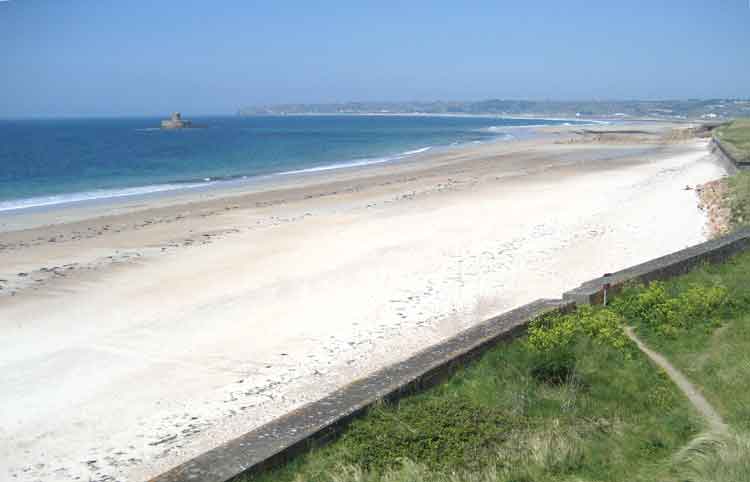
The beach is a dream. White sand, great swimming, and one special rocky outcrop just for us. It’s U shaped, so building a wall of sand across it would stop the rising tide from engulfing us. It was such fun battling against the rising tide as it sought to erode our damn.
The south and west coasts
Time was running short but we just had to visit these coasts and their bays to say ‘hello again’ to other favourites and recapture the fun of many picnics and swimmings. Using every minute we had, we continued our explorations.
St Ouen’s five mile long bay click to enlarge
Originally a fishing village, St Aubin’s Harbour looks across a sand covered bay to St Helier. Portelet Bay with its fort (known as Janvrin’s Tomb) has steps carved in the cliff from the car park to the beach; it’s a puff and a half climbing back up. Corbiere lighthouse on the south west tip of Jersey is a stark reminder of the treacherous rocks which have claimed so many lives over the centuries. And finally, St Ouen’s Bay with its five mile long stretch of sand, renowned for its surfing.
Woolly Mammoths are not extinct
A few years ago when Lin and I visited Jersey’s St Helier’s marina, we moored next to a beautiful 54′ yacht with the great name of Woolly Mammoth. She’s owned by Graham and Frances who commissioned her build in Monnickendam, Holland, to be immensely strong for world circumnavigation, with ice breaking capability.
Since then, Graham and Frances have become firm friends and joined us for our visits to two of Jersey’s Michelin starred restaurants.Woolly Mammoth owned by Graham and Frances, moored in St Peter Port click to enlargeTo say these times were riotous would be the understatement of the year. Readers will know that since I’m a pillar of purity, it had to be Graham who caused these hilarious times.
Eating out
When we weren’t exploring, we ate so well. Evening meals were taken in Royal Yacht’s Sirocco restaurant, but the two main evening highlights were Bohemia and the Atlantic Hotel.
At Bohemia, we ate at the Chef’s table, where, after champagne and canapés, we chose tasting menus. The Pescatarian for Lin, the Vegetarian for Kiffer, with the Tasting for the rest of us, all with accompanying wines.
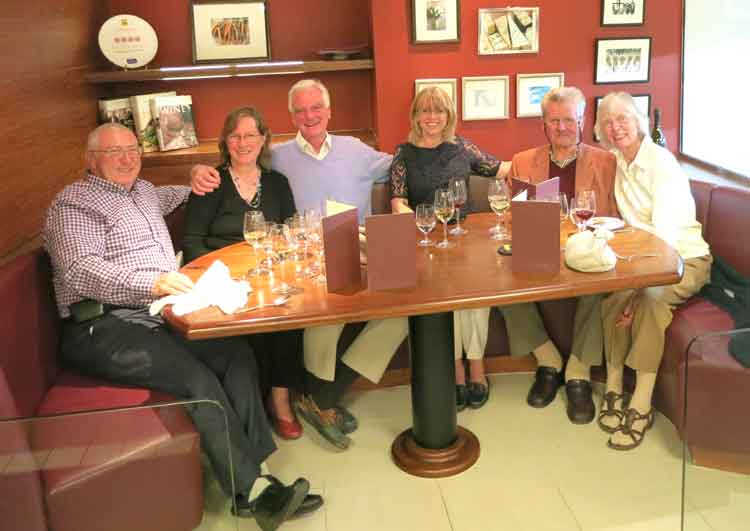
Each course was introduced to us either by our personal waiter or one of Bohemia’s chefs. Such an experience. Of course, we were all hoping there’d be a Gordon Ramsey style kitchen incident. Sadly, the kitchen ran so smoothly that only three minor incidents occurred. Hmmm.We ate at the Chef’s table in Bohemia’s kitchen Graham, Lin, Piers, Frances, Kiffer, Hilary click to enlargeHaving started at 8pm, when it came to midnight we still had three courses to go….
The next evening saw us at the Atlantic Hotel’s Ocean restaurant. I have to say that in my opinion, the food were the finest I’ve ever experienced, anywhere, anytime. Simply magnificent in all respects. It makes me wonder whether they will soon have a second star.
Time to say goodbye
We knew it was coming, but it always hits home when goodbyes have to be said.
After we’d eaten at the Atlantic, we had to say goodbye to Graham and Frances. The next morning we drove Hilary and Kiffer to Jersey’s airport where hugs and tears could not hide the sadness at having to part. Maybe, just maybe, we could all meet again soon for another extravaganza at the Atlantic.Hilary on the pinkiest of pink granite boulders at Portelet Bay click to enlargeBy 2pm, Lin and I drove back onto the Condor Express fast cat. In just in hour we were back in Guernsey and soon on Play d’eau. It seemed so quiet. ‘What shall we have for dinner?’ asked Lin. ‘How about something plain and simple?’ I said. ‘I don’t think I could possibly eat anything other than beans on toast.’
And so ended my birthday celebrations where I’d been surrounded by the family for three weeks, had the most tremendous adventures, eaten so very well, and met up with friends John and Beryl, Graham and Frances, and David and Diana.
My thanks and deep gratitude to my wife, Lin, for all her ideas and arrangements. Can’t wait until I’m 65 again!
Piers
from the Saloon of Play d’eau
Fleming 55
PS – I’m told in Guernsey that Jersey rich double cream is known as skimmed milk, and that Jersey Royals taste far better if smothered with Guernsey butter….
You can get in touch with us any time by using our Contact Form.
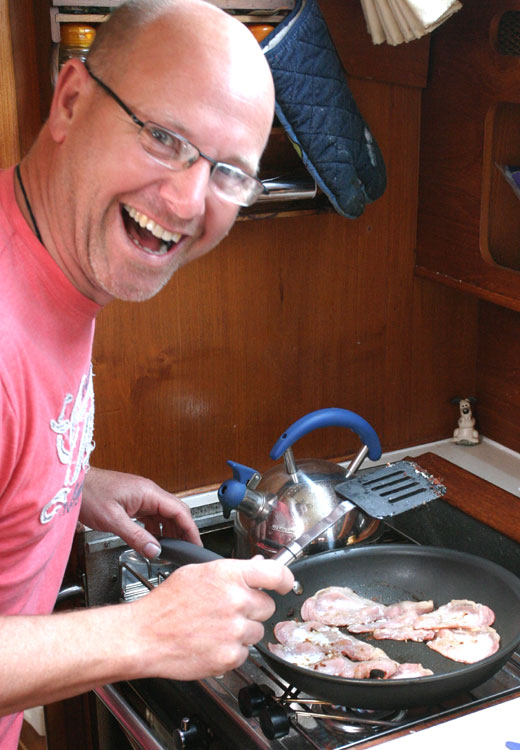
Dave of Yacht Invictus (née Akemi) cooking my birthday breakfast click to enlarge
Today I was 65 years old and qualified for my free bus pass!
Birthday Breakfast (and a duck egg)
After my 12 birthday cards had been opened and displayed, there was a knock on the side of the boat. ‘Piers – you awake?’ Dave of Yacht Akemi had sent an envoy (Nick Blampied who was working on Dave’s yacht) to invite me to a birthday breakfast of bacon and eggs.
Arriving on Akemi, Dave announced that since I was ‘birthday boy’, I would be honoured by being given his last duck egg!
A few moments later and a plate was passed to me with acres of crisp bacon topped with the colossal duck egg all sandwiched between two slices of bread. How luscious and decadent.
Having licked my fingers (and the plate – for which I make no apology) and washed it all down with some good coffee, we started swapping flying stories before it was time to return to Play d’eau.
What a great way to start to start the birthday celebrations.
Birthday Lunch
At 1330, accompanied by my sister Hilary and brother in law Christopher, Lin and I climbed the pontoon walkway to The Restaurant at Beaucette Marina to meet some Guernsey friends, David and Diana, for another round of eating excellent food and drinking even more good wine.
Many hours later and full to bursting, we all left the restaurant for tea and coffee on Play d’eau.
Birthday dinner
Birthday dinner? Needless to say, none of us felt we could eat anything more. We were full to the brim. Instead, we watched the gripping DVD (Invictus) before falling into bed.
What a great day, and boy, it’s a hard life being 65.
Piers
from the Saloon of Play d’eau
Fleming 55
You can get in touch with us any time by using our Contact Form.
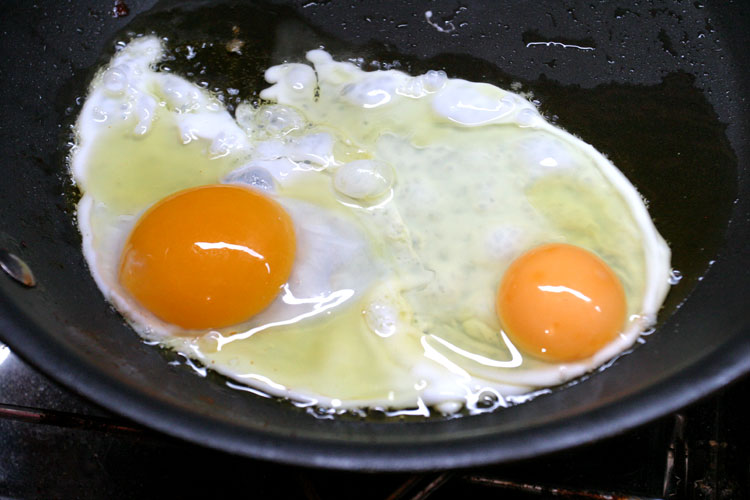
Duck or chicken egg? No comparison click to enlarge
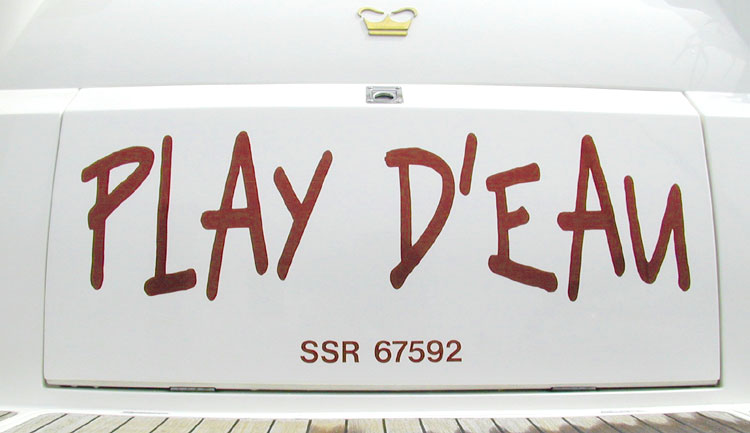
The origin of the name Play d’eau has its roots in 1992, and it was 1995 when the name was first used in earnest.
Play d’eau Our Princess V39 click to enlarge
The Cougar
When we bought our 50kt Cougar Predator 35 in 1992, we had the task of deciding on her name. We wanted the name to be distinctive and memorable.
The Cougar was long, sleek and fast with a low profile. And that’s where the start of the play on French word for water came from – we called her L’eau Profile.
The Princess
Moving up to the Princess V39 in 1995, the name L’eau Profile didn’t suit her. However, we wanted to keep play on the word ‘eau’.
As the time for ownership came close, the whole family went into a huddle and brainstormed. Suddenly, our youngest son said, ‘It’s obvious! Since the boat’s Dad’s new toy, it has to be called Play d’eau.’
Play d’eau Our Fleming 55 click to enlarge
(Just in case you haven’t understood, the double play on words for us, is that in the UK there’s a children’s plasticine modelling material called Play Doh….)
And on 21 March 2002, the URL playdeau.com was registered with the intention of developing a website around our future adventures.
The Fleming 55
When we upgraded our Princess V39 for the Fleming 55 in 2003, there was no contest for the name. It just had to remain as Play d’eau.
Part 1 registration
Play d’eau is Part 1 registered on the British Registry in Guernsey.
Piers and Lin
from the Saloon of Play d’eau
Fleming 55
You can get in touch with us any time by using our Contact Form.
These were the voyages of Piers and Lin du Pré aboard their Fleming 55