Tag Archives: Cornish sea salt

Pea Soup

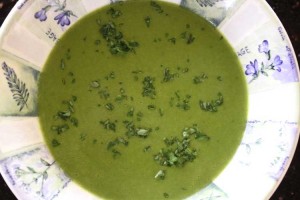
This pea soup has such a great depth of colour
click to enlarge
The French just seem to have a way with food, don’t they?

When visiting France, we always look forward to our first can of Petit Pois. Only recently, did we realise the one we really liked had lettuce with it. Lettuce? Well, that sowed the seed for this recipe.

It took a number of trials, but we believe this to be the winning formula – and “it’s yumptious” as my great niece told me.

For the soup – 8 servings

1kg frozen peas – petit pois are best
25gm flat leaf parsley leaves only, no stalks*
30gm lettuce leaves (from green ‘floppy’ lettuce)
40gm Salted butter
1 ltr Vegetable stock
Salt
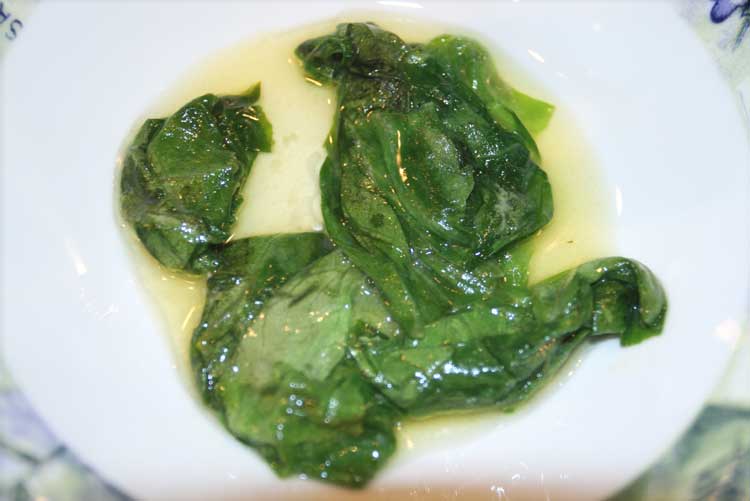
Wilt the lettuce in the butter and set aside
click to enlarge
* Keep the stalks for your next batch of vegetable stock.

For serving

Some finely chopped parsley for the garnish
Bread rolls or Croutons

You will need

Saucepan
Hand-held or small stand-alone liquidiser

Making the Pea soup

Trim the lettuce until you have the correct weight of green leaf.

Over a medium heat, melt the butter in a saucepan, add the lettuce and stir gently until it’s wilted. Remove the mix to a dish and set it aside.

The peas, parsley and stock
all a-bubbling in the pot
click to enlarge
Into the same pan (don’t clean it – whatever is left is good flavouring) place the peas and enough stock to cover them. Add the parsley on top.

As it heats to simmer point, stir occasionally, making sure there’s enough stock to keep it all covered. Keep simmering for a few minutes until the peas are just cooked.

Remove the pan from the heat and add the lettuce and remnants of the butter.

After it’s cooled a while, liquidise well – really well.

Adjusting to taste

At this point, you need first to adjust the soup to the right consistency. If you think it’s too thick, add more stock in small quantities. We believe this soup is far better thinner than thicker.

Once the consistency is right, add salt. Keep tasting until this is just right as well. Don’t add pepper. The black specs will spoil the look.

‘Le crunch’ from croutons are a great addition
click to enlarge
As with so many of our recipes, this soup is much better after a night in the fridge. The flavours come together and seem to enrich themselves.

A ‘minty’ enhancement

If you want a little something extra, go ‘minty’. Start by adding 25gm of mint leaves before liquidising, with more if you want a hefty minty kick.

Serving the Pea Soup

Reheat the soup but do not let it boil. Stir well and check again if it needs more salt and more stock. If you’ve used all your stock, skimmed milk is OK.

Pour into warm bowls and add a sprinkling of finely chopped curly parsley on top.

For ‘le crunch’ add some croutons but don’t let them become soggy. To make sure this won’t happen, serve them separately.

This really is a ‘yumptious’ soup.

Piers and Lin
from the Galley of
Play d’eau

You can get in touch with us any time by using our Contact Form.

Stuffed Eggs – delectable and luscious

Basic ingredients for stuffed eggs
click to enlarge
This is the most glorious recipe for a food that simply doesn’t last long on the plate.

Simple to make, luscious to eat, and very, very moorish.

Beware the smash and grab raids….

Stuffed Eggs

6 eggs
¼ tsp finely chopped shallot
4 tsp chopped curly parsley
1 tsp chopped curly parsley for the garnish
4 tsp mayonnaise
1½ tbsp cream cheese (or half and half with Boursin)
Small pinch of salt
Paprika or Smoked paprika for ‘garnishing by dusting’

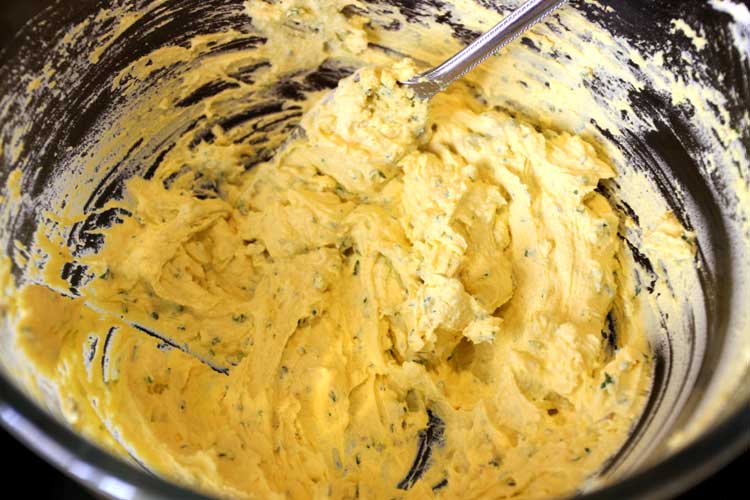
The yolk mixture should look rich and creamy
click to enlarge
Note: It’s always best to use your own home made mayo. However, if this isn’t to be, we’ve found Lesieur mayo to be excellent.

Preparation

Carefully place the eggs in a saucepan and cover with cold water. With a medium heat, slowly bring them to a gentle boil and keep them simmering for a further ten minutes.

Whilst the eggs are cooking, finely chop the parsley and shallot.

When the eggs are cooked, place the saucepan under the cold water tap and allow cold water to flush the heat away.

Once the eggs are cold, pick them out of the saucepan one by one, gently crack the shells and remove them and the outer membrane, replacing the shelled eggs back into the saucepan to stop them turning black.

Almost ready…
Filled with the yolk mixture, half dusted with paprika, and waiting for their final garnish with parsley
click to enlarge
With a sharp knife, slice the eggs in half lengthwise. Ease the yolk out of the white and place it in a bowl. Return the white to the saucepan.

With all the yolks in the bowl, add the shallot, cream cheese, mayonnaise and a pinch of salt, and mix them thoroughly with a fork.

When the mixture looks rich and beautifully creamy, taste it to see if it needs more mayo or cream cheese or salt and adjust to taste. It’s almost a case of you can’t add too much.

When happy with the mix, add the chopped parsley and fork it in.

Dressing the eggs

One by one, remove the whites from the saucepan, place them on a dish cloth and carefully dry the inside by dabbing with the egde of the cloth. This helps the yolk mixture to stick to the white and not slip out!

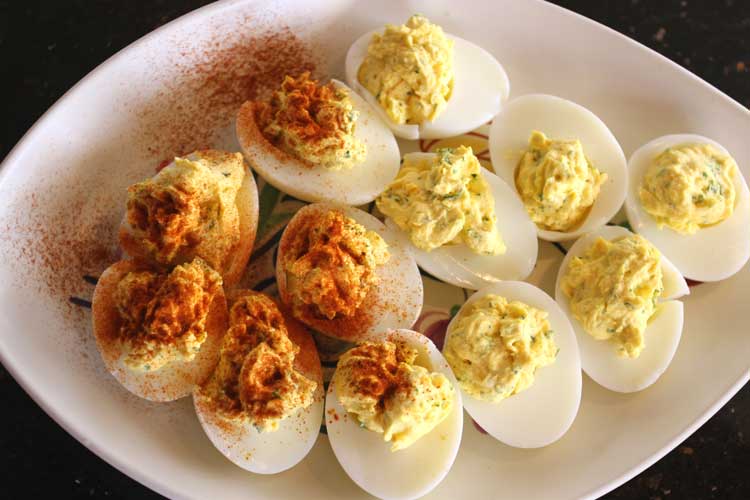
Ready to be served
It must be pointed out that in the few moments my back was turned, three ‘disappeared’….
click to enlarge
With all the eggs stuffed and arranged on a plate, sprinkle them with more finely chopped curly parsley.

Try dusting some of them with paprika or smoked paprika. The easiest way to do this is by placing a pinch in a small fine sieve (or tea strainer). Hold it over the eggs to be anointed, and gently knock it.

How many is enough for two?

We have to say that whenever we’ve made stuffed eggs they are barely on the plate before there are smash and grab raids.

However, as part of a lunch, 6 eggs between two seems a good balance. When you have guests, you will need many more.

Piers and Lin
from the Galley of
Play d’eau
Fleming 55

You can get in touch with us any time by using our Contact Form.

Gazpacho to cool those hot, hot days

This Gazpacho is just perfect for a hot day when ‘cool’ is needed. It’s so refreshing, so ‘clean’.

(Modified on 3.8.2013 & 17.8.2013).

Making it in these quantities means you’ll have a good number of servings. Any left over can be kept in the fridge for use during a heat-wave, or frozen whilst you wait for the next heat-wave.

Gazpacho
dressed with diced cucumber and shreds of basil
click to enlarge
Ingredients

2 kgs tomatoes, mixed varieties, all very ripe
1 large red pepper, deseeded, pith removed, chopped
1 medium size red onion, chopped
1 large cucumber, peeled and sliced
6 tbsp rich tomato sauce
1 tbsp tomato paste
200ml vegetable stock (or water)
100ml extra virgin olive oil
3 tbsp. balsamic vinegar
1 large clove of garlic
3 tsp salt
½ tsp fresh ground black pepper

To Serve

Cucumber, peeled and diced, excluding the pippy bits
Basil, shredded

You’ll need

Large bowl
Large sieve
Large spoon
Sharp pointed knife
Liquidiser or good hand held blender
Saucepan with boiling water

To Prepare

Peel the garlic, slice lengthways and lift out the core, its soul. The soul causes bitterness, the last thing you want in this soup.

Chop the garlic finely, place it in a large bowl and add the stock, red pepper, red onion, cucumber, rich tomato sauce, tomato paste, olive oil, balsamic vinegar, salt and pepper.

Then attack the tomatoes. You need to skin and de-seed them, leaving only the flesh.

To do this, take a tomato, carve out its crown with a pointed knife, and make a cross with two small cuts across the bottom of each tomato. Place them, one at a time, in a bowl of boiling water, bottom up. After a few moments you’ll see the skin start to peel from the cross. Lift the tomato out and peel off all the skin. Provided the tomatoes are very ripe, this will be an easy task.

Repeat this process for all the tomatoes.

To de-seed the peeled tomatoes, first cut them into quarters. Then, using your thumb, scoop out the seeds and any loose debris into a sieve over the bowl of ingredients; the juice you’ll extract from this later will be key to the recipe. Don’t waste anything.

Set the tomato flesh aside.

Using the back of a large spoon, extract the juice from the seeds and debris into the bowl.

Finally, cut the tomato flesh into thirds and add to the bowl.

Mix everything as best you can.

Ladle the mix into a liquidiser and liquidise, but not into a fully fine liquid. Given the quantity you’ve prepared you may need to liquidise in several sessions.

Pour the final mixture into a clean bowl, give it a final stir, taste, and adjust the seasoning if necessary.

Cover with cling film and place in the fridge for 24 hours to mature.

Serve cold from the fridge with finely chopped cucumber sprinkled on top with shreds of basil.

Scrummy.

Piers and Lin
from the Galley of
Play d’eau
Fleming 55

You can get in touch with us any time by using our Contact Form.
Celeriac soup

What a delicious soup this is. Whether you love or dislike celeriac or even know what it is (!) you will like this soup.

Celaric – not the prettiest veg on the market stall
click to enlarge

Again, the recipe for our celeriac soup has been developed over the last few years, ensuring it’s kept simple whilst maximising on flavour.

For the soup – at least 6 servings

1 medium/large Celeriac
150gm Salted butter
½ ltr Vegetable stock
Sea salt

For serving

50gm Salted butter
100ml Double cream
Crème Fraiche
Finely chopped Chives
Crouton Soldiers
Truffle oil

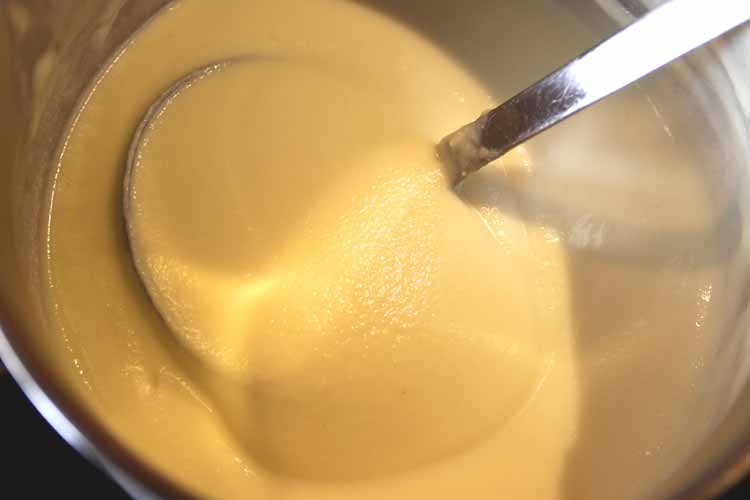
After liquidising, the celariac soup should be beautifully smooth
click to enlarge

You will need

Saucepan
Hand-held or small stand-alone liquidiser
Bowl

Making the Celeriac soup

Trim the celeriac and remove the outer layer of skin. You only want the white flesh. Take care, since this veg is a tough old thing and needs a sharp knife to cut it. Take care of your fingers.

Slice the celeriac into 2cm cubes. Hint: If there’s likely to be a delay between cubing the celeriac and starting to cook it, cover the cubes in a bowl of water with some lemon juice to stop the celeriac turning brown.

Melt the butter in a large pan, add the celeriac and stir with a wooden spoon to ensure everything is covered with butter.

Cover the pan and cook gently over a low to medium heat (don’t burn the butter) for 10 minutes, stirring every two minutes to keep everything covered in butter.

After these ten minutes are up, add enough stock to cover the celeriac and cook over a medium heat until the celeriac is just soft.

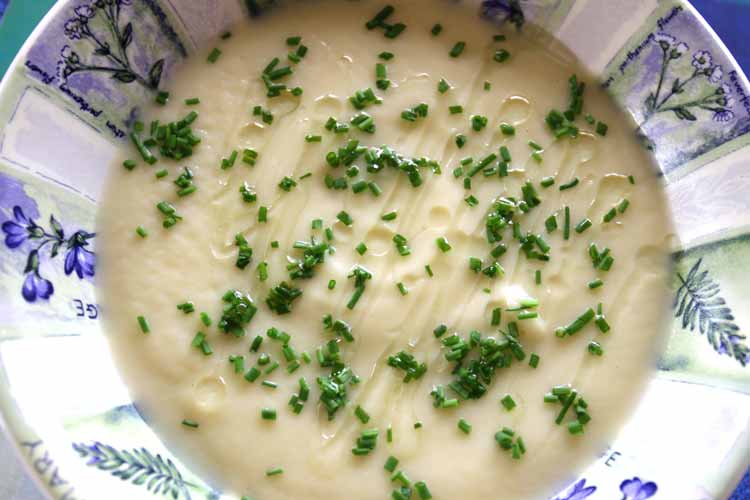
The Celaraic soup before the ‘dollop’ of crème fraiche is added
click to enlarge
Remove the pan from the heat and allow it to cool a bit before liquidising really well. If it’s too thick for the liquidiser, add more stock or fresh milk.

Provided you’ve liquidised it well there’s no need to sieve this soup.

Return it to the heat and add salt as required. You may be surprised how much is needed but you’ll know when it’s just right – it’s obvious.

Don’t add pepper. The black specs will spoil the look.

Serving the Celeriac soup

Pour the soup into a clean pan and reheat – do not boil – and add the double cream. Stir well and check if it needs any more salt.

Finally, check the consistency is right. Add more stock or milk to thin, or keep on the heat to thicken.

Pour into warm bowls and add a sprinkling of chopped chives and a drizzle of truffle oil on top.

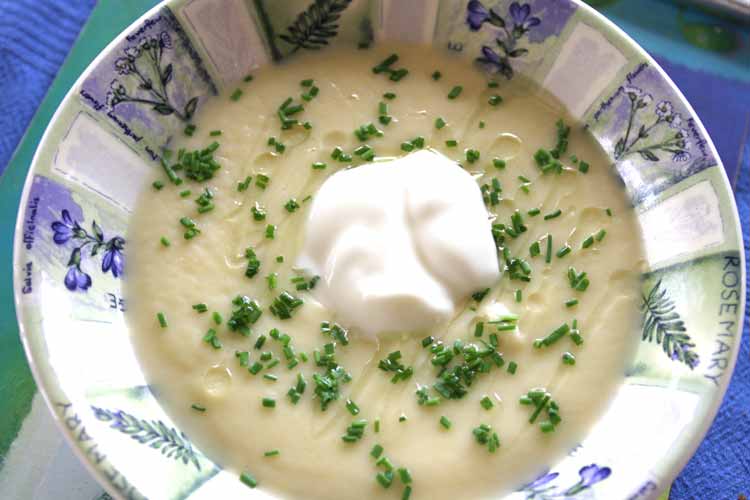
Chives, truffle oil and the ‘dollop’ of crème fraiche just make this soup
click to enlarge

Finally, place a small dollop (a Play d’eau technical term) of crème fraiche on the top of each serving.

Each person should have six Soldier Croutons.

Additional touches

As with most soups, leaving them in the fridge to ‘mature’ brings a greater depth of flavour. Keeps well in the freezer.

This soup is also great as an Amuse Bouche, served either hot or cold without the croutons.

Coming soon…
  • Poached eggs that look so good
  • Vinaigrette dressing using a raspberry vinegar

Piers and Lin
from the Galley of
Play d’eau
Fleming 55

You can get in touch with us any time by using our Contact Form.
Squash and Ginger soup

Squash and Ginger soup ready to be devoured
click to enlarge

The clue to this beautiful soup lies in its simplicity and flavour maximising. Although the amount of ginger may sound excessive, I assure you it isn’t. It’s just gorgeous.

For the soup – at least 6 servings

1 Large Butternut Squash
200gm Salted butter
½ ltr Vegetable stock
8cm x 2 cm Fresh ginger
Sea salt

For serving

Crème Fraiche
Finely chopped Corriander
Crouton Soldiers

Squash, Ginger, and vegetable stock
click to enlarge


You will need

Saucepan
Hand-held or small stand-alone liquidiser
Cheese grater or a coarse Microplane
Bowl

Making the Squash and Ginger soup

Slice the squash into 2cm ‘wheels’. Cut the skin off, and, using a teaspoon, remove all traces of seeds and membrane.

Using the same teaspoon, use the edge to scrape the skin off the ginger.

Cut the squash wheels into 2cm x 1cm pieces.

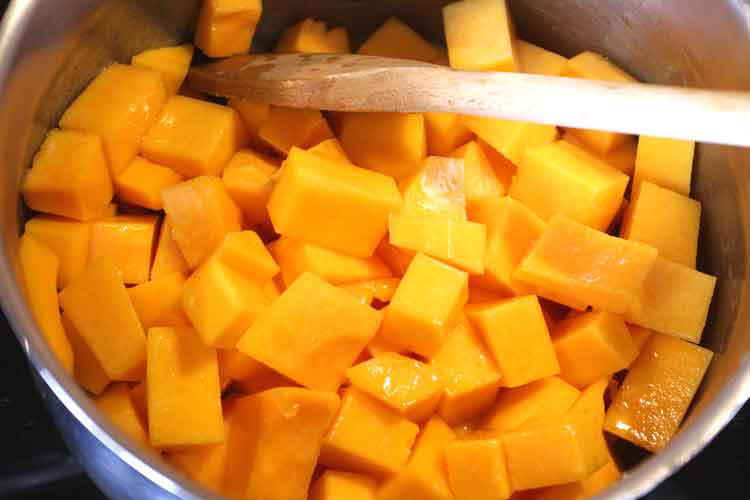
The squash cut into 2cm wheels
click to enlarge

Slice the ginger thinly, or grate it if you’ve kept it in the freezer. (Note: keeping peeled ginger in the freezer is a really good idea. It keeps for ages and can be grated easily whilst frozen)

Melt 150gm of butter in a large pan, add the squash and ginger and stir with a wooden spoon to ensure everything is covered with butter.

Cover the pan and cook gently for 10 minutes, stirring every two minutes to keep everything covered in butter.

After these ten minutes are up, add just enough stock to cover the squash and cook until the squash is just soft.

Remove the pan from the heat and allow it to cool down a bit before liquidising really well. If it’s too thick, add some more stock or fresh milk. Provided you’ve liquidised it well there’s no need to sieve this soup.

Serving the Squash and Ginger soup
The Squash and Ginger, basted with butter, before the stock is added
click to enlarge

Pour the soup into a clean pan and reheat – do not boil – and add the rest of the butter. Stir well, adding salt to taste. (Note: don’t add pepper since it’s black specs will detract from the look of the soup)

Pour into warm bowls.

Place a small dollop (a Play d’eau technical term) of crème fraiche on the top of each serving and a small sprinkling of finely chopped coriander.

Each person should have six Soldier Croutons.

Additional touches
  • Once liquidised, allow the soup to develop its flavour in the fridge for 24hrs – if you can wait that long!
  • Drizzle some Truffle Oil on each serving before adding the coriander. Brings a earthy depth

This soup is also great as an Amuse Bouche, served either hot or cold without the croutons. Keeps well in the freezer.

So, so simple, yet so, so beautiful.

Piers and Lin
from the Galley of
Play d’eau
Fleming 55

You can get in touch with us any time by using our Contact Form.

‘Best of Breed’ Cooking Ingredients

Cornish sea salt.
Until we tried this we hadn’t tasted real salt.
click to enlarge
This post is to list the ingredients we’ve found to be best of breed. As time allows, we’ll be adding more.

Salt

From Table to Maldon to Pink Himalayan – which salt for you?

Our first ‘salt revelation’ came when we were shown that weight for weight, you have considerably more salt by quantity if you use an unprocessed sea salt rather than a free running, chemically enhanced table salt.

Our second ‘salt revelation’ was realising there were many different real salts: Maldon, Pink Himalayan, Cornish, Welsh coastal, and the list goes on and on.

So, we lined up over a dozen salts and tried them, judging each for its salty taste and saltiness strength factor.

Burford Brown eggs
with their dark orange, luscious tasting yolks
click to enlarge
Cutting to the chase, Cornish Sea Salt harvested straight from the Atlantic at the Lizard peninsula won by miles. A beautifully pure salt taste with a high salt factor meaning you use less to achieve the same saltiness.

Sadly, there’s no salt from Guernsey – maybe there’s a business to be had?

Cornish Sea Salt is available from some of the major supermarkets such as Tesco and Waitrose.

Eggs

Now this is something we just stumbled on without thinking. A ‘Doh!’ moment.

If we needed eggs, it was simply a question of size – small, medium or large.

One day, the only eggs left on supermarket’s shelf were from Cotswold Old Leg Bar hens. Opening the box to check them, the eggs were smaller than usual, but more surprisingly the shells were blue – not the normal brown or white!

Maille raspberry flavoured vinegar
click to enlarge
Later, when we came to use them, the yolks were such a deep orange colour, and even better, when we came to eat them, the depth of flavour was so much more intense.

This led us to try other types, and the only other that’s a challenger is a Burford Brown. Taste-wise the same, size-wise it’s larger and with a dark brown shell.

So our recommendation is Burford Brown, followed by Cotswold Old Leg Bar.

Available from some supermarkets such as Sainsburys, Morrisons and Waitrose.

Vinegar

Having been served a mayonnaise that was so, so delicate and luscious, we were told it had been made with a Raspberry Vinegar. What a difference it made.

Since then, we have used Raspberry Vinegar for our own mayonnaise and vinaigrette dressings.

We’ve also tested various makes but there’s no doubt in our mind that Raspberry Vinegar from Maille takes the crown.

It can be difficult to find in the UK, but it’s everywhere in France, of course.

Olive oil

Colonna olive oil infused with organic lemons
click to enlarge
Now here’s an interesting one. From the many olive oils that range across the shelves, we’ve found a firm favourite which Lin uses in so many dishes.

Colonna Granverde.

This is a Sicilian extra virgin olive oil taken from the first cold pressing but with a difference.

Organic Sicilian lemons are added to the olives so both are pressed together producing an oil infused with a citrus zest and aroma. Perfect.

Available from Waitrose.

Guernsey Butter

Now here’s a delight you really must try.

Guernsey butter tastes of butter. Sounds crazy but just compare Guernsey butter with the butter you usually have and you’ll have one of those ‘Damascus Road’ experiences (well, almost) and you’ll realise what you’ve been missing!

Once you’ve opened a pack, there’s no need to keep it in the fridge. Just leave it out at room temperature. It keeps for weeks like that and is always at the right consistency to spread.

You can store Guernsey butter in the freezer for months if not years, and if you have the room I’d certainly recommend buying the June and July made butter since the cows will have been grazing on the fresh spring and summer grass.

The butter of all butters. A rich, deep yellow butter, that restores faith in how butter should taste
click to enlarge
Both salted and unsalted versions are made.

Do let us know how you get on with using Guernsey butter – hopefully you’ll never look back, and no, we don’t have shares in the Guernsey Dairy.

Waitrose usually stocks Guernsey butter.

Piers and Lin
from the Galley of
Play d’eau
Fleming 55

You can get in touch with us any time by using our Contact Form.