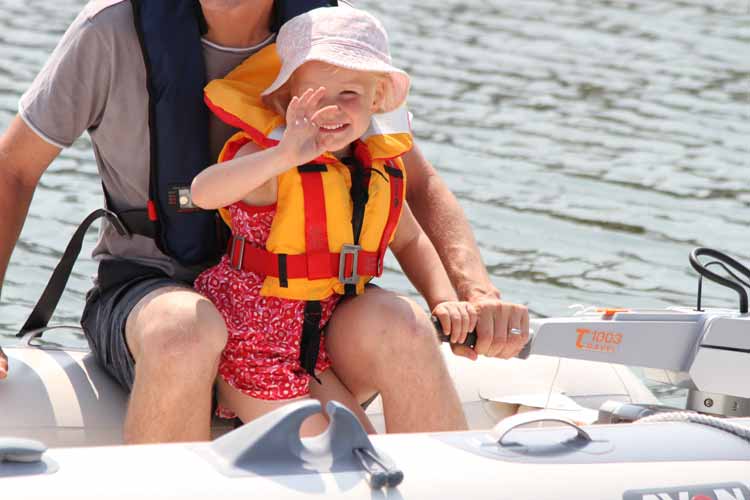
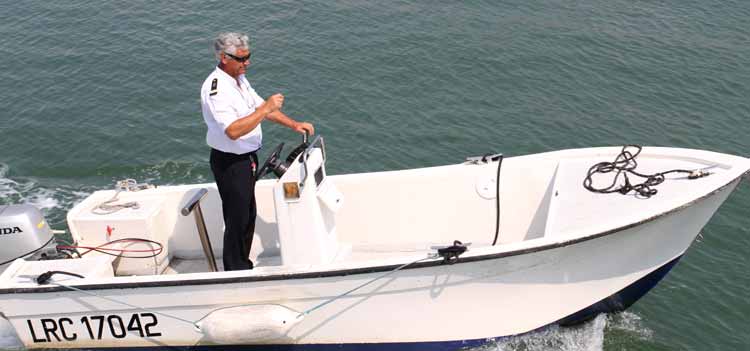
The two ‘weasels’ with Dad in the dinghy click to enlargeWe had a great treat yesterday.
One of our sons, his wife and two children are on holiday staying with two of their dear friends who live in Riberac, France.
Yesterday, they all came to visit us on Play d’eau in the Bassin des Chalutiers, La Rochelle.
Arriving just before lunch it was so good seeing them all again; we’d missed the family so much, and the two grandchildren, the ‘weasels’, gave us such hugs.
Their friends had created and brought a superb lunch with them, after which some of us dozed and had a siesta. Meanwhile, Play d’eau’s dinghy had become the focus of attention.
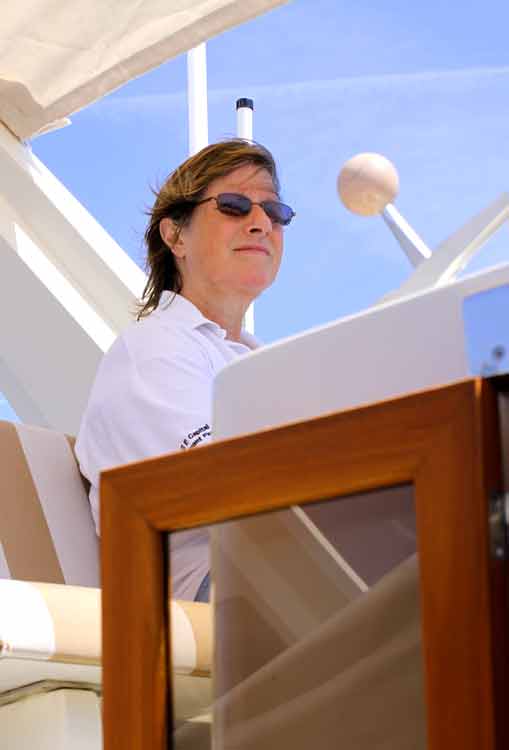
The weasels, as the grandchildren are known, tested the Torqeedo battery operated outboard to the full. Brilliant fun all round.Madam in charge in the dinghy with Dad as an optional extra click to enlargeA late afternoon stroll into the old town with ice creams was ‘de rigueur’ followed by dinner of various moules dishes on the quayside to complete our red letter day.
It can’t get much better than this.
Piers and Lin
from the Saloon of Play d’eau
Fleming 55
PS – Lin has almost managed to eradicate the cherry stains from the sofa….
You can get in touch with us any time by using our Contact Form.
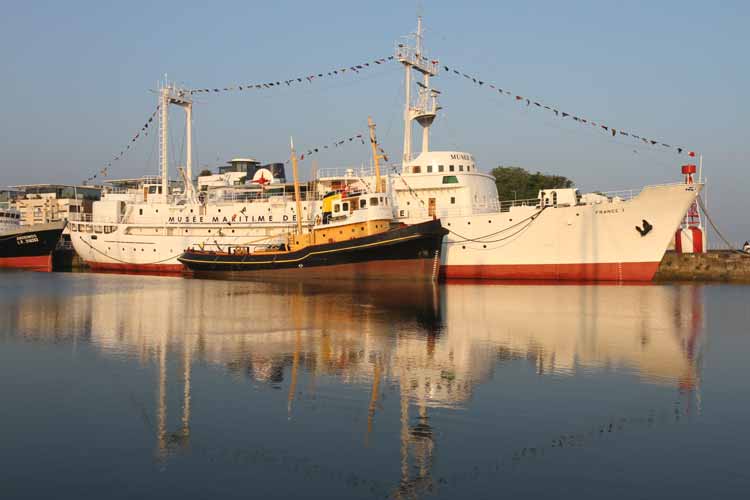
The France 1 Ocean Station Vessel 50 crew, launched 1958, decommissioned 1985 click to enlarge“Ocean Station Vessel Lima, Ocean Station Vessel Lima, Ocean Station Vessel Lima, this is Speedbird 201, over.”
When flying for BOAC in the 1970s, I’d call these ocean station vessels (OSVs) on the VHF radio when overflying the Atlantic. Being stationed in specific geographic locations, OSVs could identify you by radar and advise your position. Really helpful given astro-nav and Loran were the two main navigation aids – there was no GPS in those days.
The ship France 1
France 1 is now a Maritime Museum moored in the Bassin des Chalutiers in La Rochelle, just across from where we are with Play d’eau.
Yesterday, we paid our few euros, picked up the English France 1 briefing, and boarded her. Standing on the aft deck Lin began reading.
‘France 1 was a stationary meteorological frigate operating in the Atlantic in the 1970s.’OSV locations on the Atlantic click to enlargeIt turned out that France 1 was an OSV, and more to the point, one with which I must have had radio contact during the many Atlantic crossings I did in the Boeing 707 in the 1970s. Memories began flooding back.
Mayday, Mayday, Mayday
I only ever heard one Mayday whilst flying and it was over the Atlantic, at night. A Piper Cherokee Arrow, a small single engine light aircraft with retractable undercarriage was en route from Newfoundland to Ireland.
The pilot was radioing a Mayday. No was answered, so I responded. He told me the Cherokee’s undercarriage had suddenly come down, adding drag, decreasing his airspeed and increasing his fuel consumption such that he now had insufficient fuel to reach Ireland and would have to ditch in the Atlantic. Could I contact the nearest OSV for radar guidance so he could ditch next to it and be rescued?
On the radio you could sense his relief at knowing he now had a potential route to survival.
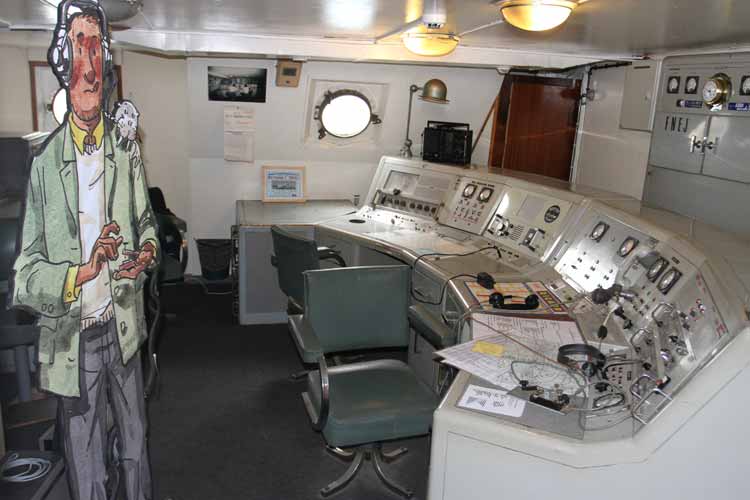
I contacted the closest OSV. Yes, of course they’d help. I asked for the sea state. It was dreadful. Really dreadful. High winds, high seas, with huge primary and secondary swells. With full cloud cover and no moon it would be pitch black. He wouldn’t be able to see anything. His chance of surviving would be minimal.The Communications Room on the France 1 The full size cardboard cut-out (left) is not me! click to enlargePassing the sea state back to the pilot you could hear the fear grip his voice.
In the short pause that followed, a new voice came over the ether. ‘Speedbird, this is Ascot, over.’
‘Speedbird, this is Ascot’
Ascot was the callsign used by the RAF, and in this case it was an RAF Nimrod aircraft designed for maritime surveillance and patrol.
‘Speedbird, we have altered track to intercept the Cherokee and will shortly be in range to talk direct. Meanwhile, can the pilot give us his rate of fuel burn and remaining fuel?’
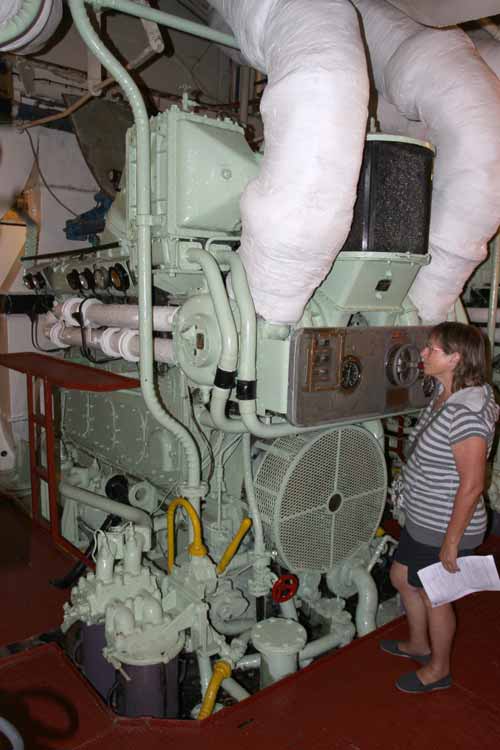
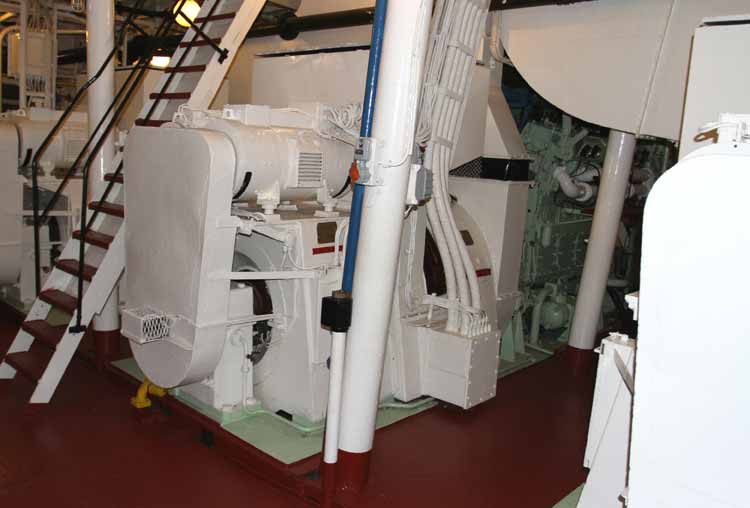
In the minutes that followed, the Ascot was in direct contact with the Cherokee just as we flew out of range. The last transmission I heard was, ‘Cherokee, this is Ascot. If you would like, we will direct you on the most efficient track to Shannon. We will overfly and follow you and if you need to ditch we will drop a survival raft and alert the rescue services accordingly. Would you prefer this to ditching by the OSV?’France 1 had 3 x Paxman Norton 850hp main engines creating 110dB and 35C in the engine room click to enlargeI didn’t hear the response from the Cherokee – we’d just flown out of range.
Any news?
The next morning I bought the Daily Telegraph hoping to find some news. Inside, a column inch stated ‘Yesterday, an RAF Nimrod on Atlantic patrol escorted a Piper Cherokee to Shannon after it had declared an emergency. Under guidance from the RAF the Cherokee managed to land at Shannon moments before running out of fuel.’
As I gazed at the communications room in France 1, I was re-living the moment and wondering if this was the OSV with which I had acted as that Mayday Relay?
Piers
from the Saloon of Play d’eau
Fleming 55
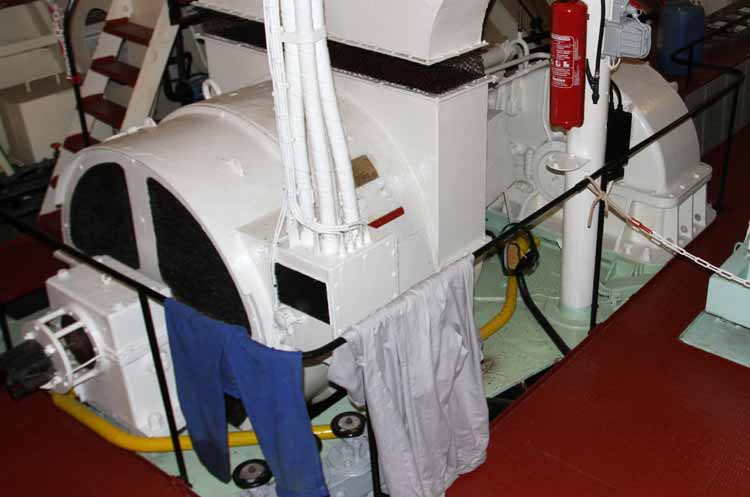
You can get in touch with us any time by using our Contact Form. The France 1 was diesel electric. Each of her three main engines turned a generator (above) to power… click to enlarge
…two electric motors one per propeller shaft click to enlarge
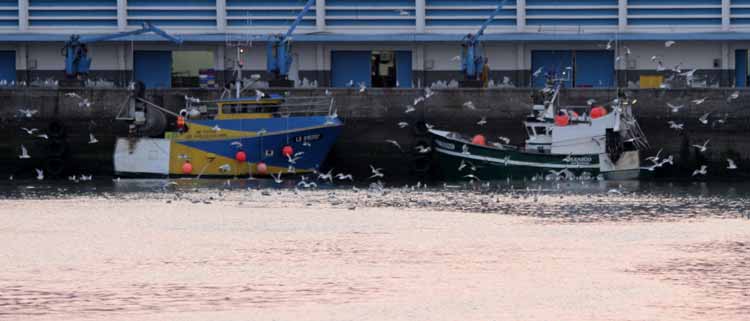
Pre-dawn long-range pic of Les Sables tralwers off-loading their night’s catch click to enlargeAs dawn was preparing to make her golden appearance to grace another red hot day, there was just enough light to see the trawlers off-loading their night’s catch at the maritime cooperative.
La Rochelle’s Bassin des Chalutiers was today’s destination.
Leaving Les Sables d’Olonne
Play d’eau was moored port side to. Having singled out the warps, Lin took the helm. Using a forward spring and a touch of starboard throttle, Lin gently eased the stern off the pontoon before engaging reverse power to take us off the berth at our planned departure time of 0730.
Neat, so neat.
The Journey
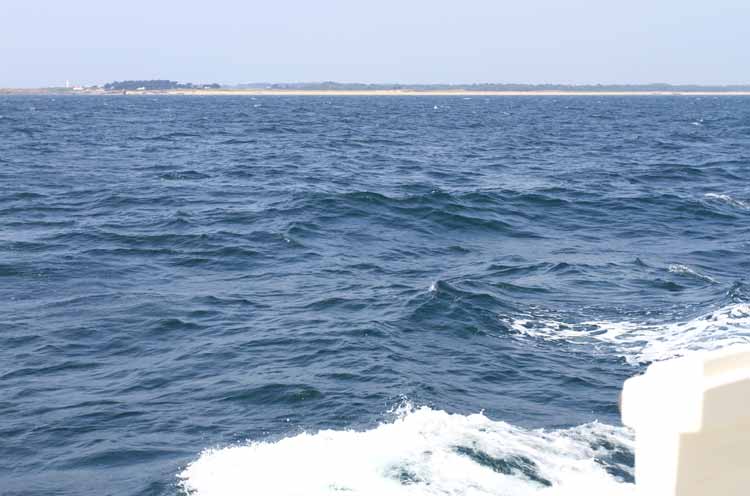
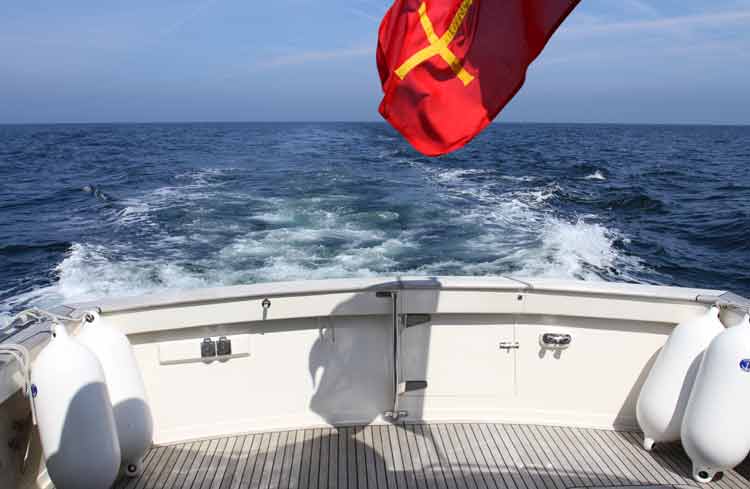
Flat calm and hot as we headed towards La Rochelle. On days like this it can be difficult to distinguish between sea and sky click to enlargeFlat, calm seas, under a hot sun. We almost succumbed to having the air conditioning on in the Pilot House, but noblesse oblige came to the fore. Instead, we baked (and regretted our decision).
Arriving
Access to the Bassin des Chalutiers is through a lifting bridge and lock gate, which is only opened for around two hours at top of tide. Hence, our early departure from Les Sables d’Olonne.
As we travelled under the huge bridge that links the beautiful Île de Ré with La Rochelle, we passed the deep water port before turning into the approaches to La Rochelle.
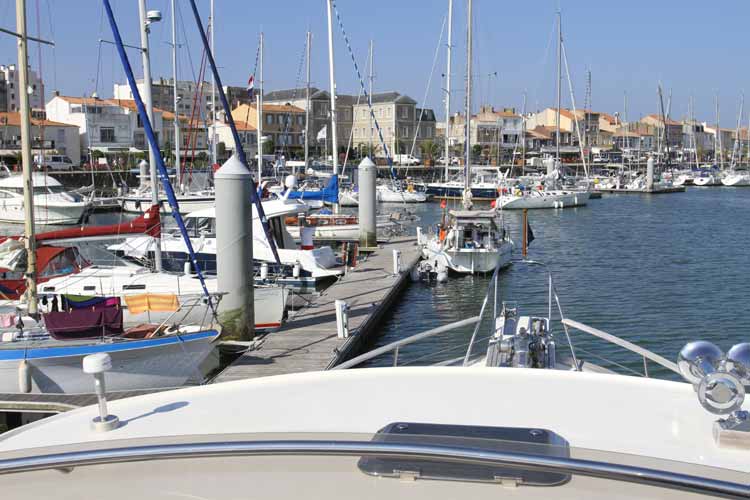
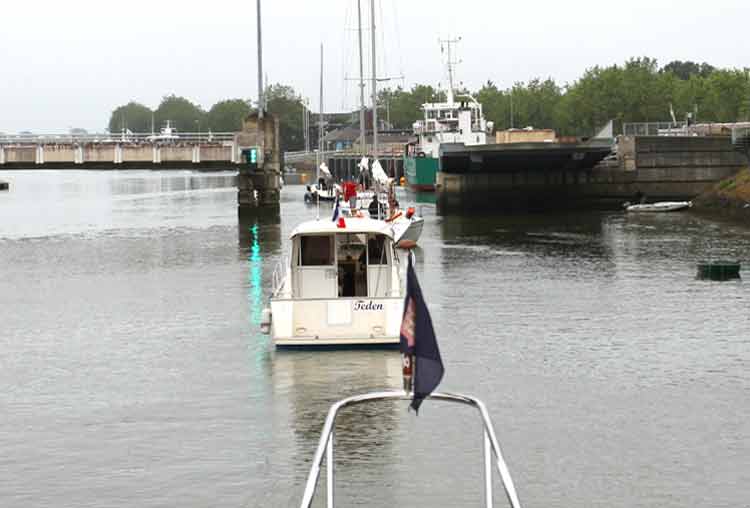
Giving the Capitainerie 30 minutes notice of our pending arrival on channel 9, we were met by M. Christian, Harbour Master, in his dory. Within moments the bridge lifted and M. Christian led us though the lock gate into the basin and to our berth.
We have electricity, water and Wi-Fi.
The tecky details
M. Christian, Harbour Master, guided us through the lock gate and to our berth click to enlarge0730 FST – Departed Quai Garnier, Les Sables d’Olonne
1245 FST – Arrived Bassin des Chalutiers, La Rochelle
Planned distance – 36.3nm
Longest leg – 13.7nm – Bourgenay SWM to NNW of Pt Grouin
Waypoints – 13
Tech issues – None.
Note: The oil leak reported on Leg 9 is under watch and will be repaired when back in Beaucette. The stabiliser pump and gearbox will have to be removed before the flywheel housing is exposed, after which the offending seal can be replaced.
Piers and Lin
from the Engine Room of Play d’eau
Fleming 55
You can get in touch with us any time by using our Contact Form.
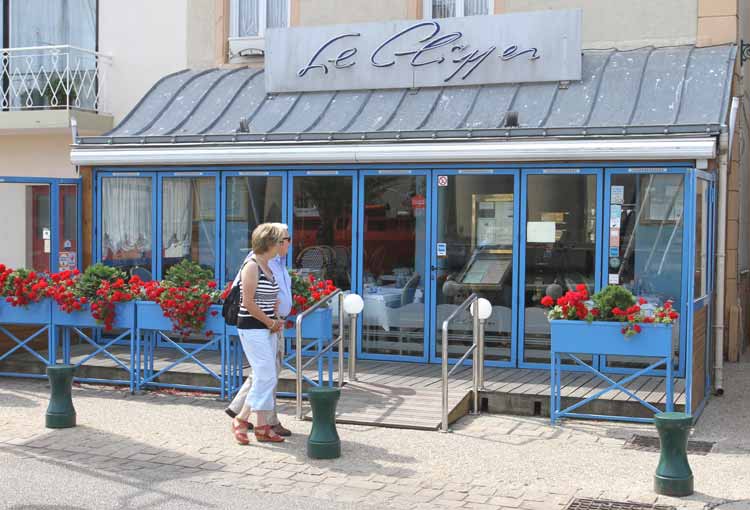
Le Clipper, restaurant gastronomique, where we celebrated our 41st wedding anniversary click to enlargeWe’ve had a great time at Les Sables d’Olonne celebrating our 41st wedding anniversary, cleaning Play d’eau, exploring the town and enjoying the constant movement of trawlers.
Wedding Anniversary
We ate at Le Clipper, one of many restaurants along the Quai Garnier where Play d’eau is moored. Why Le Clipper? It’s mentioned in the Michelin Guide, it looked different, and Madame was so welcoming when I enquired about booking.
We arrived at 7pm to be met by Chef (who looked like Alastair Simm), Madame and their daughter. Lots of hand shakings and welcomes, especially when we told them it was our wedding anniversary.
Over a Kir Royale (fraise for Lin, mûre (mulberry) for me) we chose from the 37 euro menu.
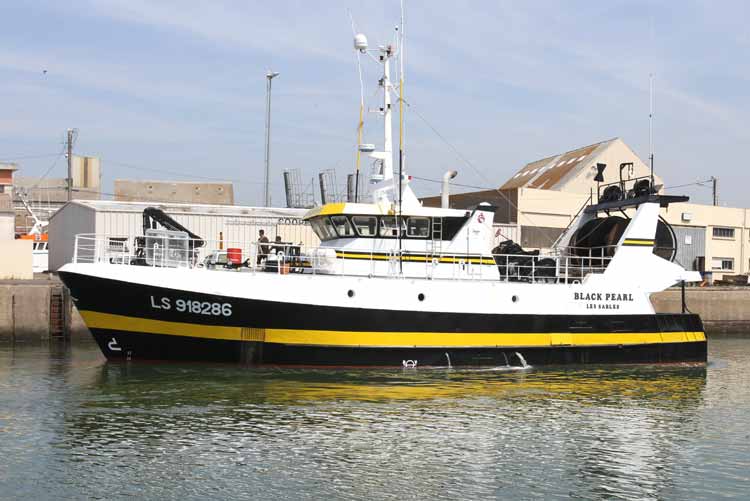
After the gazpacho amuse bouche, we both had ‘Foie Gras de canard mi-cuit, chutney de poires aux épices doux’ with a large glass of Coteaux du Layon, an Appellation d’origine contrôlée (AOC) for sweet white wine in the Loire Valley wine region of France, made from the Chenin Blanc grape, locally often called Pineau de la Loires. Luscious.The Black Pearl, one of the larger trawlers click to enlargeThe main course was ‘Filet de boeuf du Limousin cuit au sautoir purée de pommes de terre aux truffles blanche d’Italie’ washed down with a bottle of Chateau Grand Barrail from Lamarzelle, Figeac, St. Emilion.
After cheese and a small green salad, Lin chose the Croustillant d’ananas de Côte d’Ivoire rôti au cinq épices, crème aux saveurs des îles et glace coco’. ‘Just like the Caribbean on a plate,’ said Lin. I had ‘Crémeux de chocolat blanc et opaline de sucre à la vanille’. No wine with this course – we were full up!
Coffee, tea and a glass of Armagnac ended a great evening. Très gentil.
Trawlers and the fishing port
Quai Garnier shares port with the trawlers and fishing community. Large and small trawlers work non-stop, at all hours of the day and night. After off-loading their catches, they refill with ice and diesel from the maritime co-operative.
What a beach
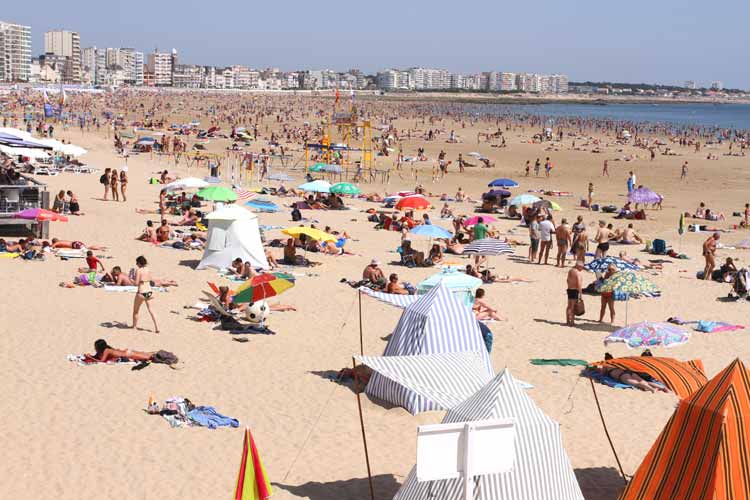
One of the smallest trawlers and lobster boats, working from Les Sables d’Olonne click to enlargeNow we know why the town has the name ‘Les Sables’. Its sandy beach is simply stunning, and in the current hot weather, people made a bee-line for it.
Le sable of Les Sables.
Well, we’re off to La Rochelle early tomorrow, so until we write again, bon soir.
Piers and Lin
from the saloon of Play d’eau
Fleming 55
You can get in touch with us any time by using our Contact Form.The beautiful sand of the huge beach at Les Sables d’Olonne click to enlarge
The forecast was right. The NE’ly had reached F5 again. Looking over the harbour wall showed a mass of white. Masts of departing yachts were ‘bucking like broncos’ as they made headway with water cascading over their bows. I suspect that if I was a yachtsman, I’d be shouting, ‘Yee Ha!’ – or is that Dave of Yacht Akemi I hear?
Decision criteria
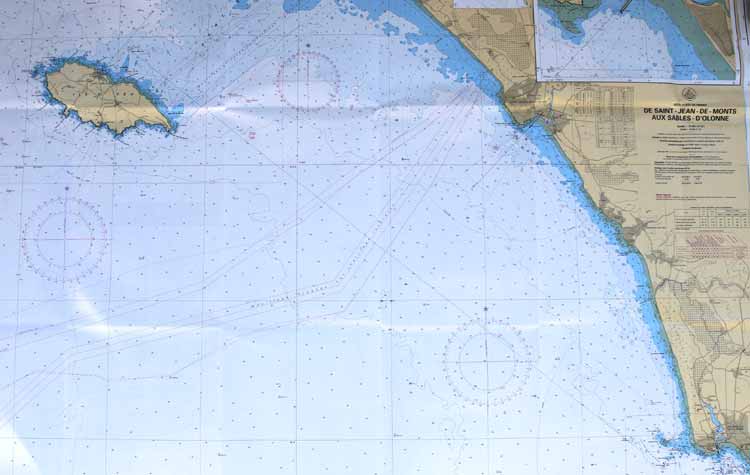
The chart of our planned SE’ly track to Les Sables d’Olonne click to enlargeWe’d normally wait until the wind and seas died right down. I mean, why have an uncomfy ride?
So what was the pressure to leave? First, the forecast was continuing with NE’ly F5/F6 for the next five days; not good. Second, the national French swarm starts this weekend possibly precluding a future mooring; not good. Third, I want to take Lin to dinner on our (41st) wedding anniversary on 15 July and restaurants in Île d’Yeu leave everything to be desired. Fourth, we need to be in La Rochelle for the 26 July – a long time away, but still a pressure.
Looking afresh at the chart, our track would be SE meaning a beam sea, reducing the closer we inched (centimetred?) to the mainland. That would be OK given we have stabilisers. So the main ‘nasty’ would be the first 1.3nm as we left Port Joinville whilst heading NE straight into wind and swell to clear shallow ground before turning SE just south of the Basse Mayence NCM.The SE corner of Ile d’Yeu. Why don’t photos ever show how rough it really is? click to enlargeDecision – if we were happy to take a head sea, we’d go providing we saw the wind drop to F4 by midday. We were, and it did.
The journey
By 1145 the wind had dropped to a mid-F4. Lin had rigged Play d’eau for ‘silent running’ (everything stowed and battened down) so we left.
Between the breakwaters we began to experience the head seas. Once out of the breakwaters and heading straight into the wind and swell, it become ‘exciting’ but in no way fearful. Play d’eau is just brilliant. Sea spray was flying everywhere!
Just to make the point, five of the yachts we’d seen leave earlier that morning had turned around and were returning….
Once we’d turned SE, the ride became manageable, and the more the journey progressed the more the seas quietened and the ride became enjoyable. Port Garnier, Les Sables d’Olonne click to enlarge
Arriving
Arriving at Les Sables d’Olonne was ease itself. Although the wind had risen to F6 it was from over the land so the sea was flat. We radioed Quai Garnier, were given a berth, and we moored up. Simples.
Play d’eau was covered in salt from the seas we’d taken. We’ll give her a good soapy bath in the morning.
The tecky details
1226 FST – Departed Port Joinville, Île d’Yeu
1646 FST – Arrived Les Sables d’Olonne
Planned distance – 29.7nm
Longest leg – 22.4nm – Basse Conche to the Petite Barge SCM
Tech issues – Stbd engine, small oil leak detected from the gearbox into the flywheel housing
Piers and Lin
from the Pilot House of Play d’eau
Fleming 55
You can get in touch with us any time by using our Contact Form.
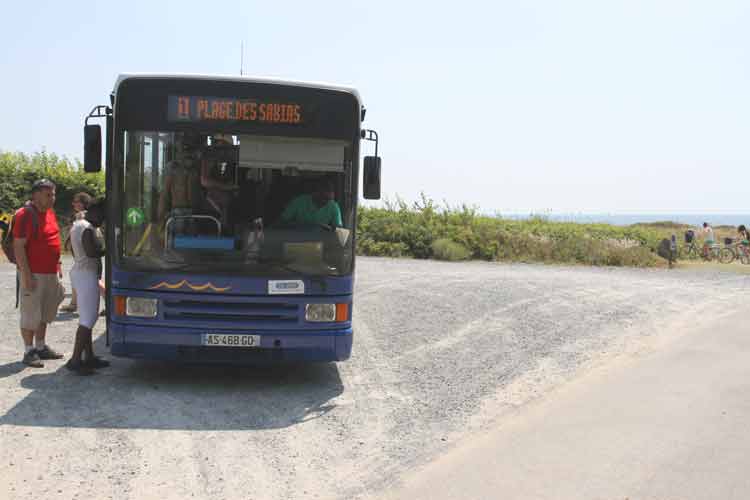
The proof that we took the bus! click to enlargeLin won. It was 27°C and exceedingly hot.
I said we should hire a car with air-con; Lin said we should walk. Between these two extremes were hiring a mini-moke or cycling for which there are many Location de Vélos in Port Joinville.
In the end and by mutual agreement, we agreed a compromise. We’d walk. Lin began studying the map of this lovely 10km x 4km Île d’Yeu.
The bus…
We took the 1412 No 1 bus for its 17 minute journey from outside the Marie (the start of its route) across the island to the Plage des Sabias (the end of its route), whence we’d start our walk.
All roads on the island are really small, much smaller than Guernsey’s, and most buildings are painted white with Wedgwood blue shutters. The coast we followed along the south of Ile d’Yeu click to enlargeVery much a Caribbean look and feel.
…the walk…
Having plastered ourselves with factor 30, we set off for the hour’s walk along the coast path which looked very similar to Guernsey’s south coast path, but scaled down.
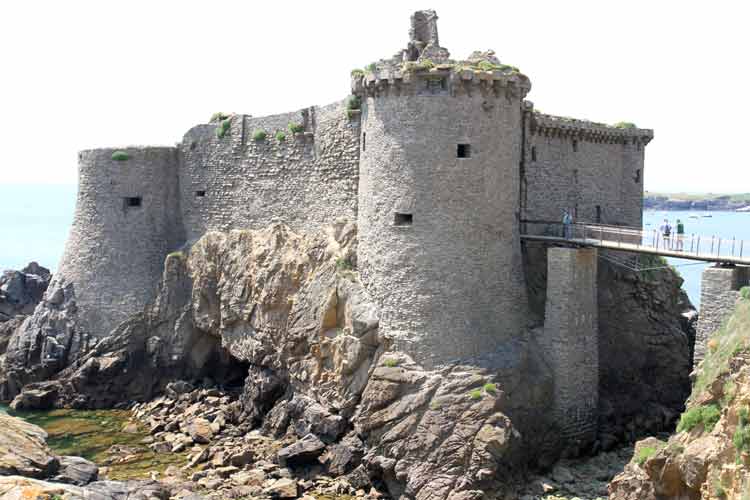
En route was the 14th century ‘Le Vieux Château’, the Island’s only fortification, which becomes surrounded by the sea as the tide rises.
All that’s left is the main castle, but in its hey-day, the castle occupied a considerable area – see the pic.
Journey’s end was Port de la Meule, a tiny, pretty harbour mainly used by crab and lobster fishermen.
…the marriage…
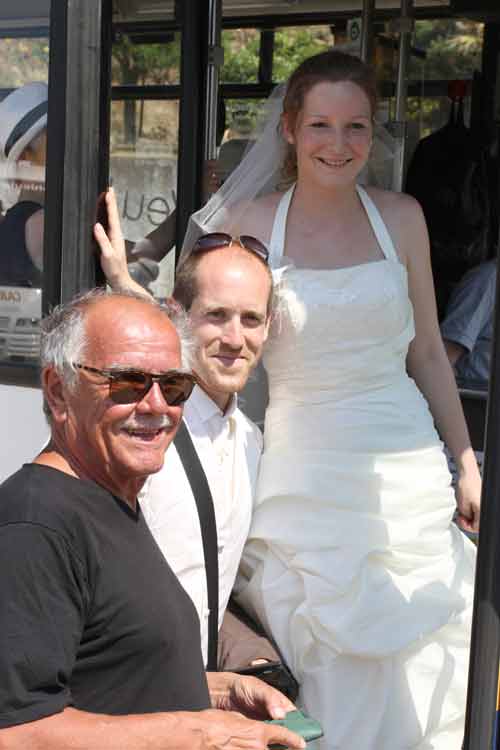
Bride and Groom and Dad catch the bus home from the reception click to enlargeJust before climbing on board the No 5 bus for the return journey (the start of its route), a bride and groom appeared from the Port’s small but busy café. They’d just been married, had their reception at the café and needed to catch the bus back to the Port. I began taking photos…
In the bus they made straight for the back seats from where the groom asked if I would take some pictures of them with his camera.
They were so in love and so happy. Humbling.
…the bus
The No 5 took 11 minutes to return us to the Marie at Port Joinville (the end of its route).
We didn’t turn our heads to see what might be happening on the back seats.
Piers and Lin
from the Saloon of Play d’eau
Fleming 55
You can get in touch with us any time by using our Contact Form.
The reception was held at the café at Port de la Meule click to enlargePort de la Meule is the only other port on this small island click to enlargeThe description of Le Vieux Chateau showing the size it used to be click to enlargeLe Vieux Chateau which becomes an island as the tide rises click to enlarge
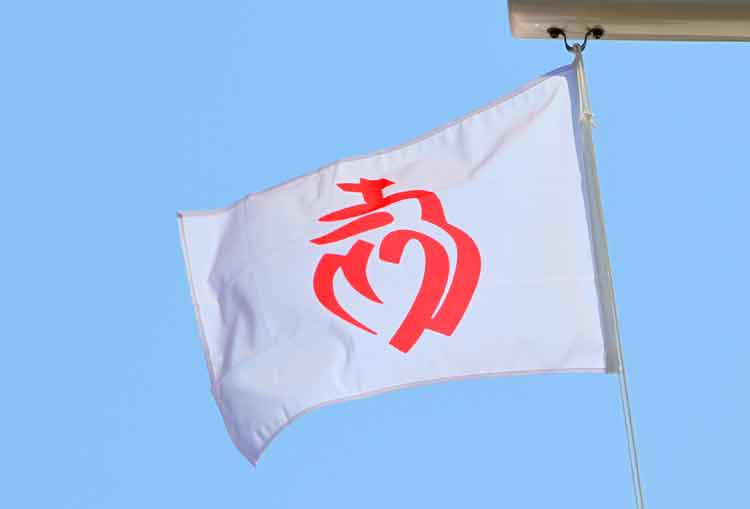
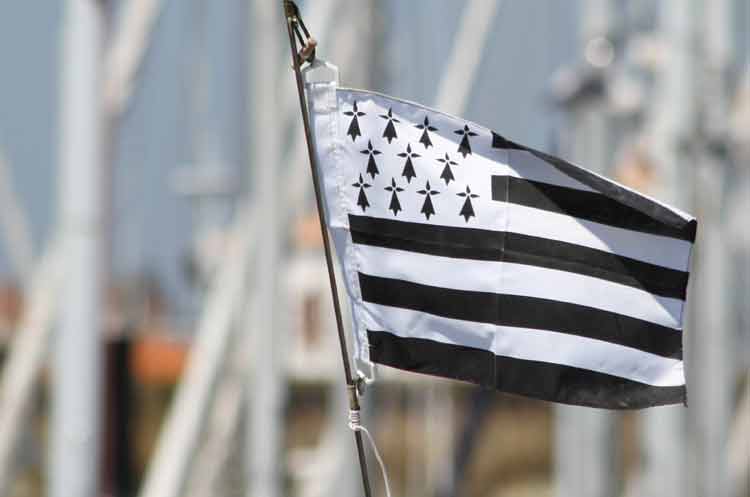
Oops! We hadn’t realised that by moving south from Vannes to Île d’Yeu we were leaving the Department of Brittany and sailing into that of Vendée, a department in the Pays de la Loire region of west central France.
We realised our error soon after arriving at Port Joinville where almost no Brittany courtesy ensigns were to be seen – apart from ours.
After Googling, and with no appearance of haste whatsoever (of course), down came our Brittany courtesy ensign. After finding the local Chandlery, up went that for Vendée.
Our humble apologies to Vendée.
Piers and Lin
from the Pilot House of Play d’eau
Fleming 55
You can get in touch with us any time by using our Contact Form. The courtesy ensign of Vendée now being worn from Play d’eau’s port crosstrees click to enlargeThe courtesy ensign of Brittany was hastily replaced by that of Vendée click to enlarge
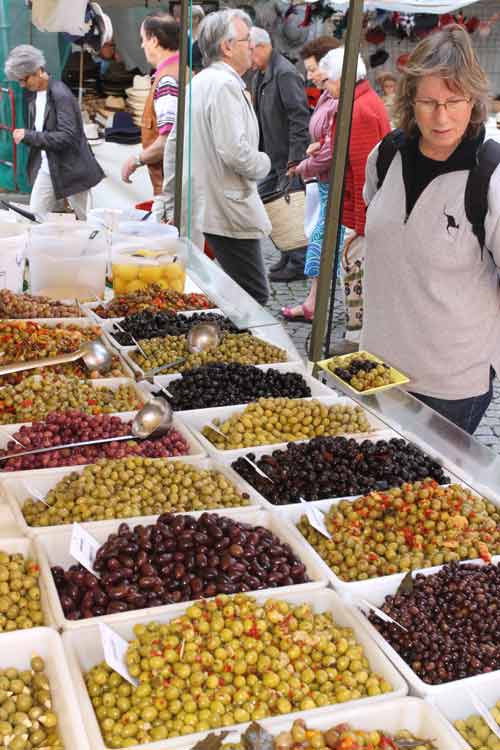
Yacht Aquitaine (Chris and Sue) were our hosts click to enlargeI confess that far too much Breton cider and Pastis was consumed and far too many olives fresh from the buzzing farmers’ market that morning; black in herbs and green in pesto. We had been invited for drinks by retired Chris and Sue of Aquitaine, a British yacht moored three places along the pontoon from us, together with their friends who were cruising in company with them on Lady Day.
Chris and Sue keep Aquitaine close by at La Roche Bernard on the La Vilaine river. Having cruised the area extensively for many years I took advantage of their local knowledge.
The plan takes shape
Taking Chris’ advice that we needed to see the off-lying islands before the annual French swarm begins on 14 July, we planned to go straight to Port Joinville on the Île d’Yeu and stay for a few days or more before returning to the mainland. A telephone call to the Harbour Master secured a mooring and the plan came together.The Kerino swing bridge opened, three greens came on and we were off click to enlargeThe forecast promised a week of light NE’ly winds, high temperatures and clear skies from an Azores high of 1028mb. In honour, we erected the flybridge bimini cover to protect us from the impending rays.
The nav plan
The only pinch point for the route was the need to be at Vannes’ Kerino swing bridge at 0730, the morning’s only opening.
The Journey
Starting grey and overcast, by midday the forecasters were right. The clear blue sky had appeared and it was hot, very hot.
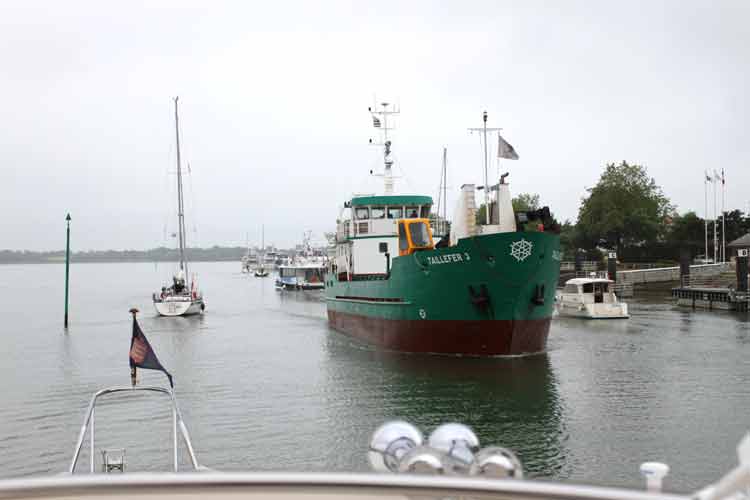
A small queue of boats waited for the 0730 Kerino swing bridge. As we exited into the narrow channel we came head to head with a coaster about to moor at the small commercial dock. Pulling as far over to the side of the channel as we dared the coaster slid by. Its skipper made a point of thanking us. Nice one.We edged to the left of the narrow channel to make way for this coaster click to enlargeThe ebb tide carried us all the way to the mouth of the Golfe averaging an extra 2kts which peaked at 5½kts close to the Grand Mouton.
Apart from one really silly fisherman in his small boat being intent on preventing a British boat from overtaking him by intentionally weaving to and fro in front of us, the ten mile journey through the Golfe was uneventful. My finger itched towards the Kahlenbergs but with discretion being the better part of valour I restrained myself, waited my time, attacked and won.
Passing close to the many reefs and islands which extend to the SE of Presq’ile de Quiberon, we espied some lovely places to anchor, especially the beach on the east of Hoedic. We marked map.
From Presq’ile to Île d’Yeu, we had a calm open Atlantic sea, its gentle swell, and a hot sun. It was lovely in the shade under the bimini.
Arriving
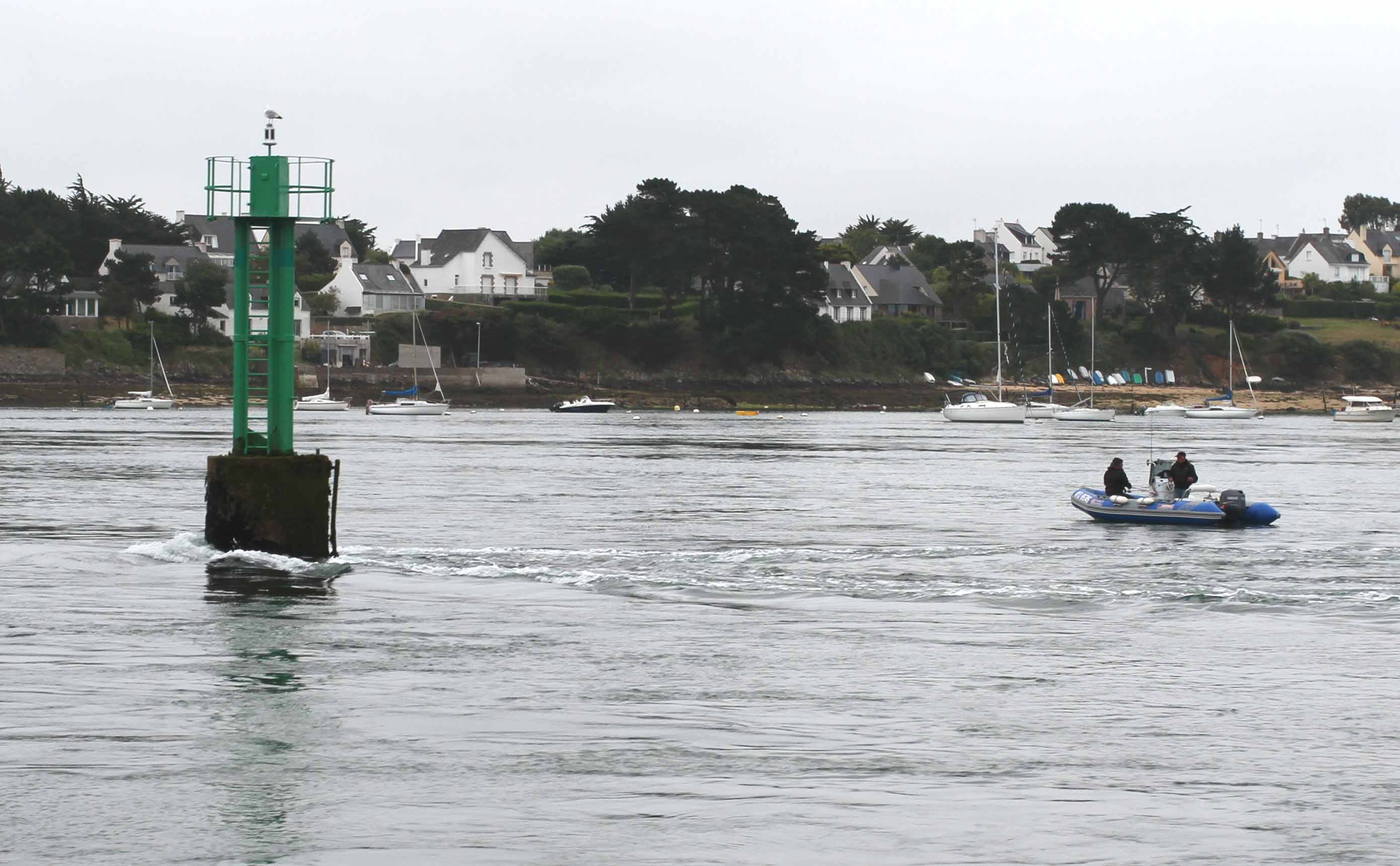
The tide was ebbing fast by the Grand Mouton beacon click to enlargeÎle d’Yeu slowly appeared out of the haze seven hours after leaving Vannes and we pulled into the Port Joinville marina just ahead of schedule and the Harbour Master guided us to our berth. Perfect.
The tecky details
0720 FST – Departed Vannes
1558 – Arrived Port Joinville
Planned distance – 67nm
Longest leg – 29.1nm – Sud Banc Guerande SCM to Port Joinville WP
Tech issues – nil
Piers and Lin
from the Pilot House of Play d’eau
Fleming 55
You can get in touch with us any time by using our Contact Form.
Lin at the flybridge helm under the bimini for shade from a very hot sun click to enlargePlay d’eau’s wake en route to Ile d’Yeu click to enlarge
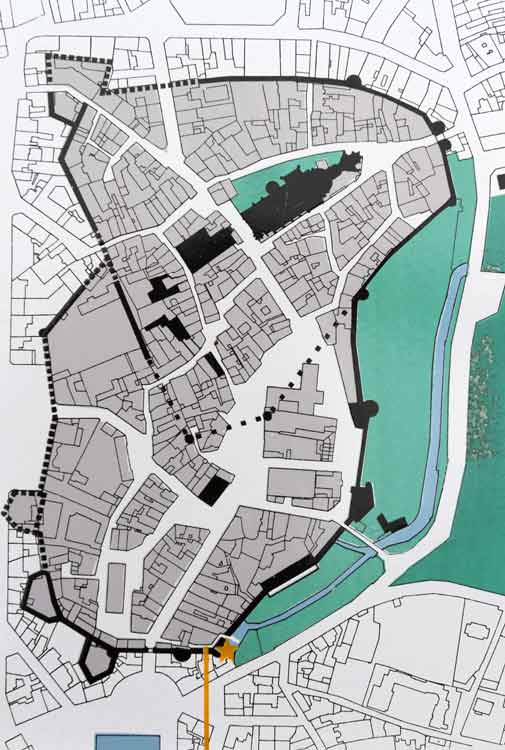
The walled town of Vannes click to enlarge
Founded by the Romans in 56 BC, Julius Caesar went on to conquer the area known as Brittany.
Throughout the third century, fortified walls were built around the town to protect it from ‘barbaric tribes’.
Between 1341 and 1364 wars of succession were fought between two families claiming the title Duke of Brittany, which was eventually won by Jean IV.
The union with France
Anne de Bretagne was the last duchess of Brittany, dying in 1514. The demise of Brittany was sealed when her daughter, Claude, married Francois d’Angouleme, the future king of France.
In 1532 Francois 1st stayed in Vannes and negotiated the Treaty of Vannes proclaiming the ‘perpetual union of the Country and Duchy of Brittany with the Kingdom and Crown of France’.
Although Brittany was still permitted to control taxes and maintain its own army, in practice its destiny lay in French hands. The title Duke of Brittany became obsolete, the region’s assets were stripped and its autonomy eroded.
Today, many Bretons today do not ‘officially’ recognise Brittany as part of France and would far prefer to return to self-rule.
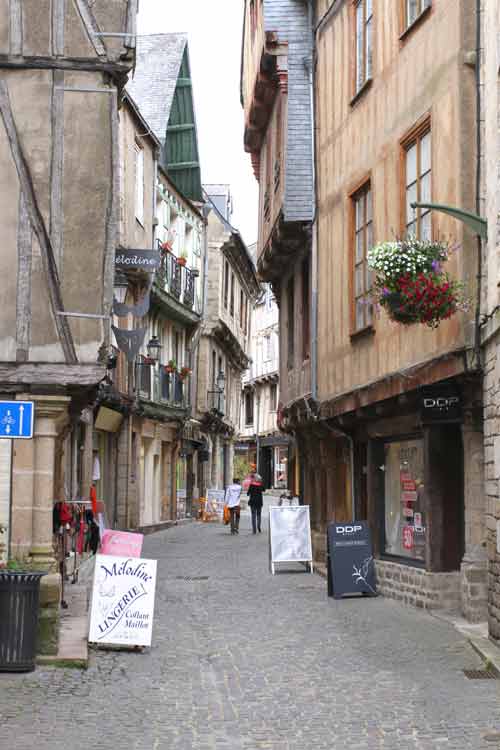
Picture post cards of Vannes
The St Vincent town gate which faces the marina click to enlarge
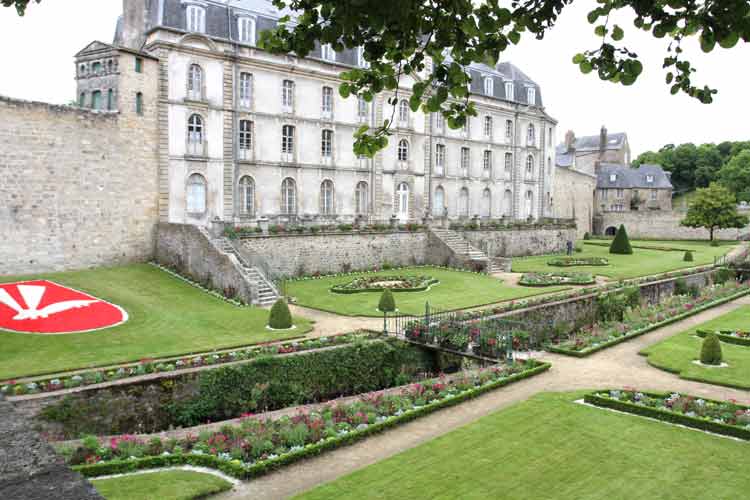
Castle De L’Hermine which housed the Brittany Parliament click to enlarge
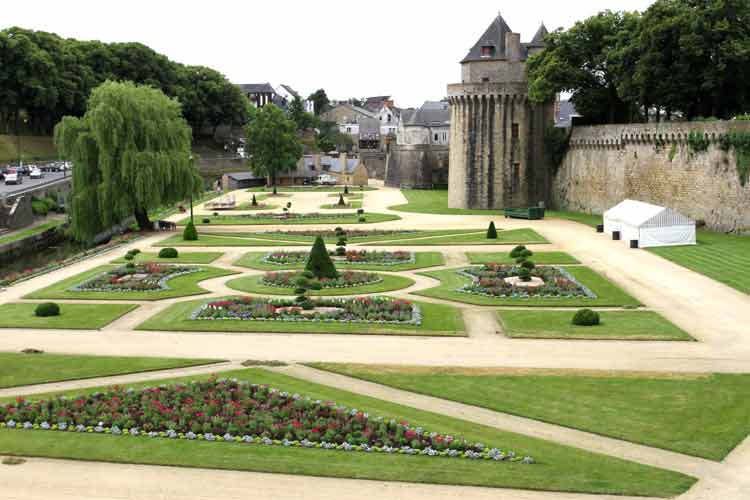
The glorious gardens of the Castle De L’Hermine click to enlarge
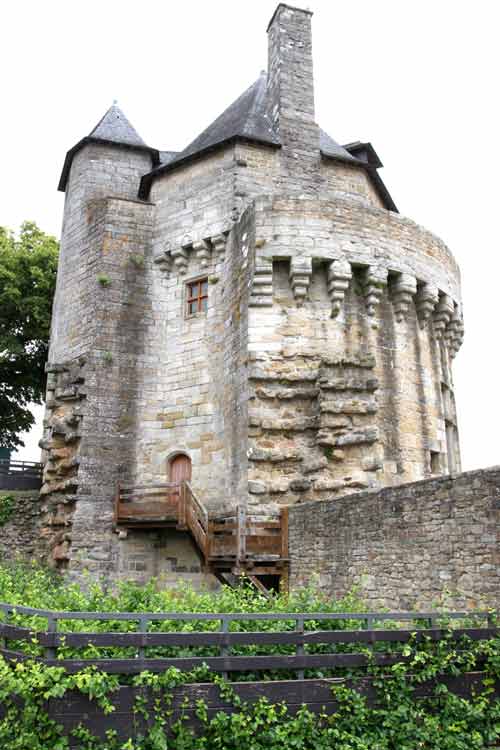
The Captain of the Guard’s residence click to enlarge
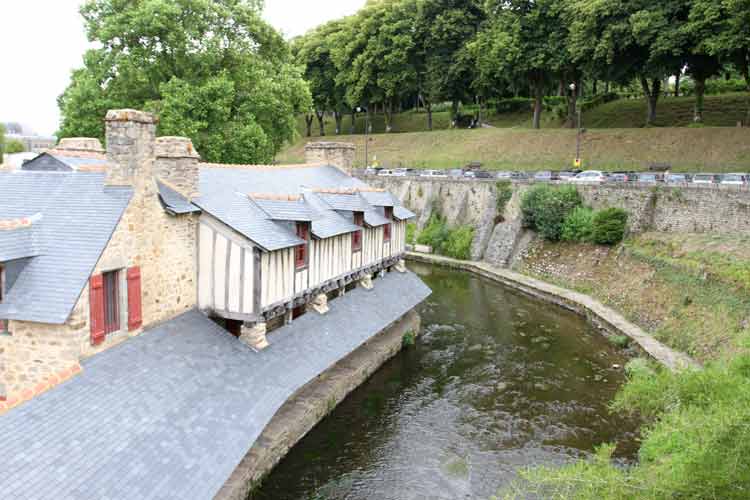
The Parliament’s Wash Houses click to enlarge
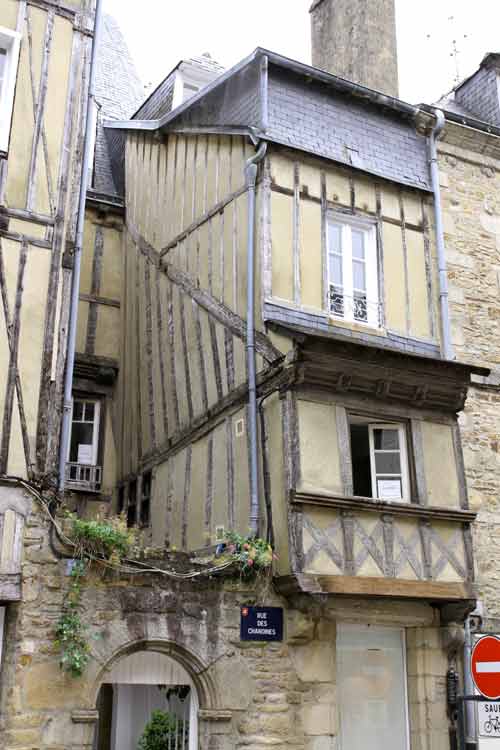
You just feel these buildings are tipping over click to enlarge
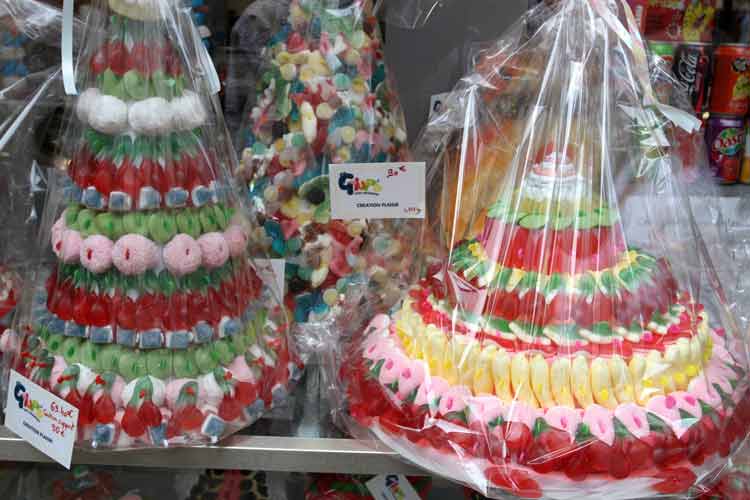
Party creations from a sweet shop called Glup’s click to enlarge
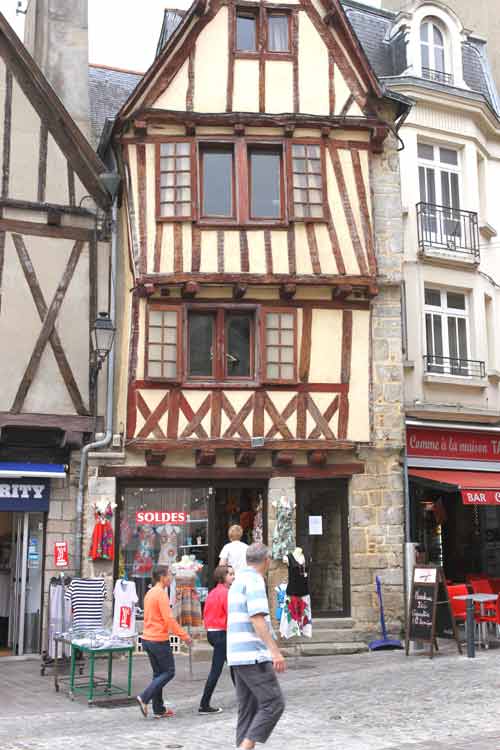
The woodwork structure is just beautiful click to enlarge
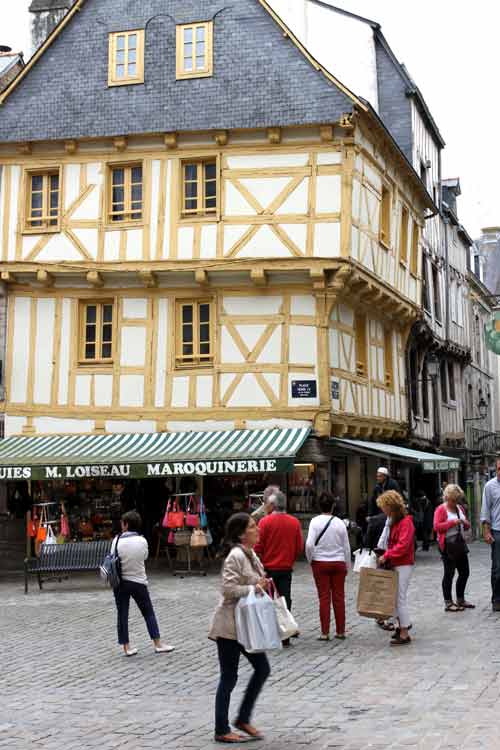
Gorgeous ancient buildings abound in the walled town click to enlarge
So many alley-ways with overhanging buildings click to enlarge
Piers and Lin
from the Saloon of Play d’eau
Fleming 55
You can get in touch with us any time by using our Contact Form.
These were the voyages of Piers and Lin du Pré aboard their Fleming 55