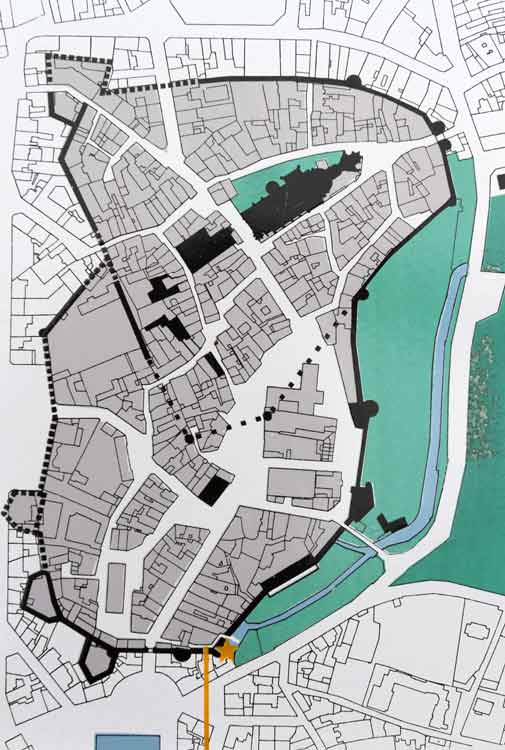
The walled town of Vannes click to enlarge
Founded by the Romans in 56 BC, Julius Caesar went on to conquer the area known as Brittany.
Throughout the third century, fortified walls were built around the town to protect it from ‘barbaric tribes’.
Between 1341 and 1364 wars of succession were fought between two families claiming the title Duke of Brittany, which was eventually won by Jean IV.
The union with France
Anne de Bretagne was the last duchess of Brittany, dying in 1514. The demise of Brittany was sealed when her daughter, Claude, married Francois d’Angouleme, the future king of France.
In 1532 Francois 1st stayed in Vannes and negotiated the Treaty of Vannes proclaiming the ‘perpetual union of the Country and Duchy of Brittany with the Kingdom and Crown of France’.
Although Brittany was still permitted to control taxes and maintain its own army, in practice its destiny lay in French hands. The title Duke of Brittany became obsolete, the region’s assets were stripped and its autonomy eroded.
Today, many Bretons today do not ‘officially’ recognise Brittany as part of France and would far prefer to return to self-rule.
Picture post cards of Vannes
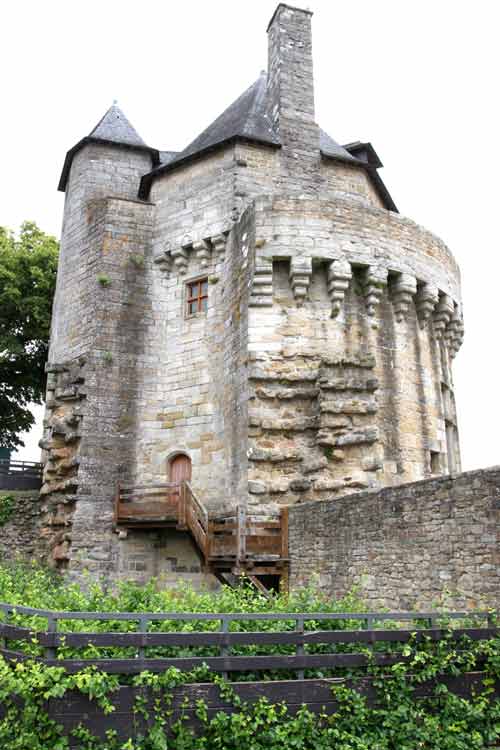
The St Vincent town gate which faces the marina click to enlarge
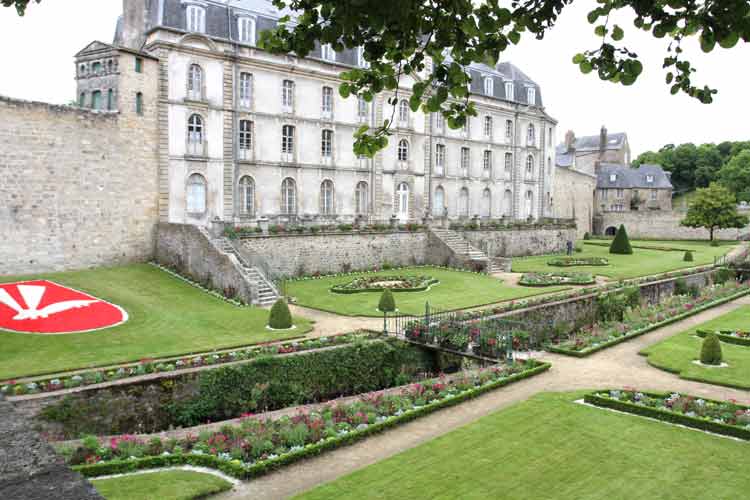
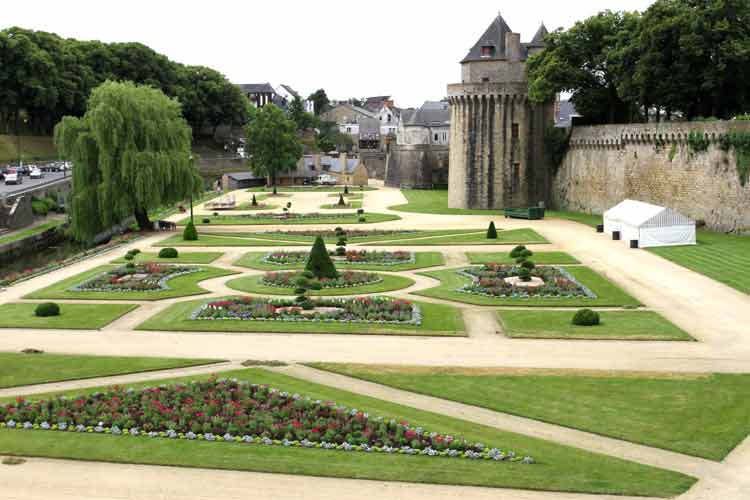
Castle De L’Hermine which housed the Brittany Parliament click to enlarge
The glorious gardens of the Castle De L’Hermine click to enlarge
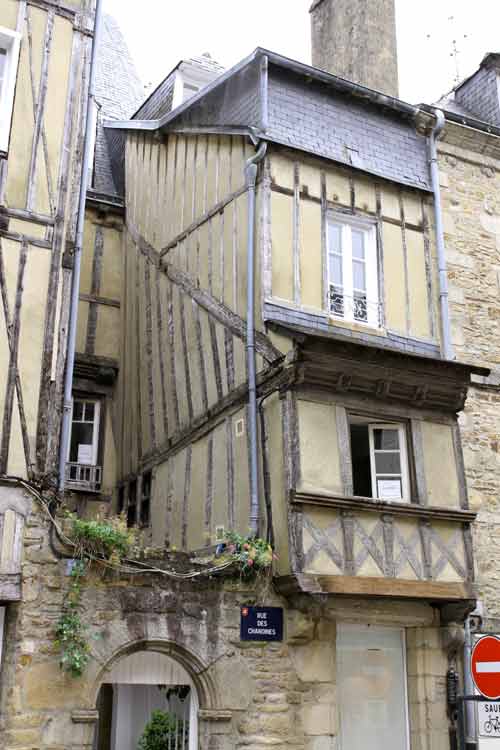
The Captain of the Guard’s residence click to enlarge
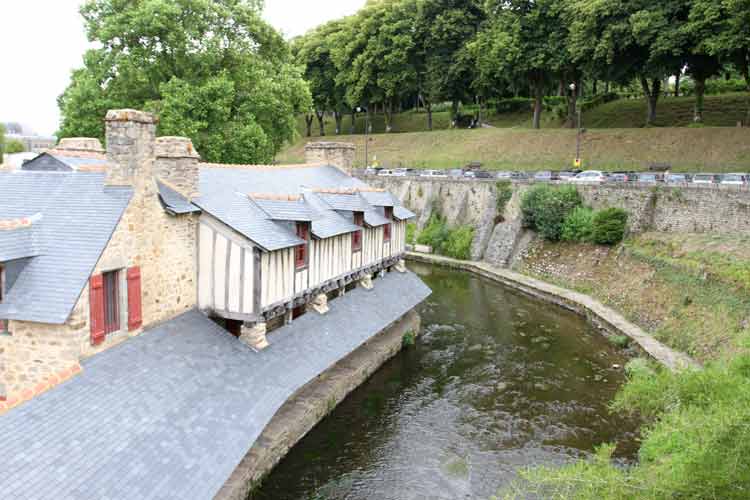
The Parliament’s Wash Houses click to enlarge
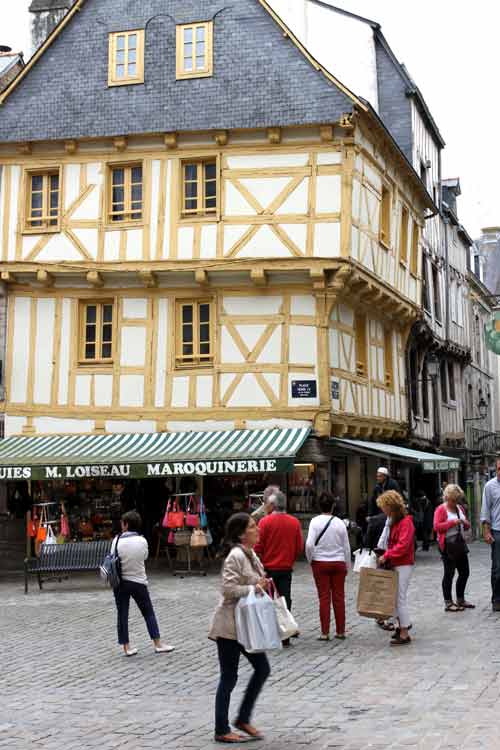
You just feel these buildings are tipping over click to enlarge
Party creations from a sweet shop called Glup’s click to enlarge
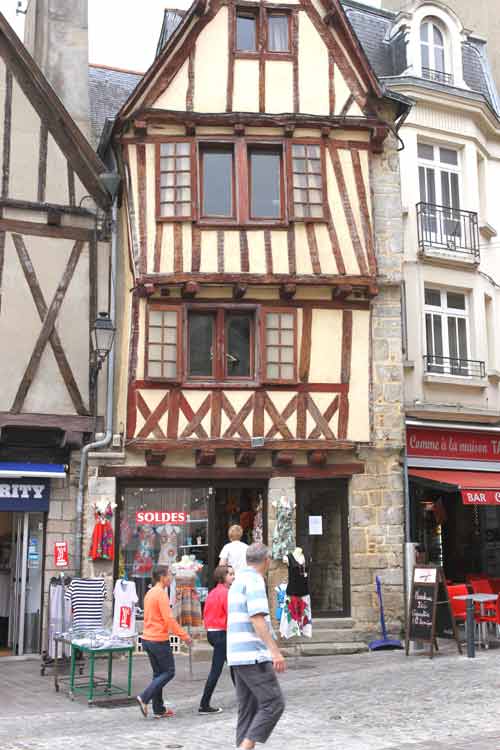
The woodwork structure is just beautiful click to enlarge
Gorgeous ancient buildings abound in the walled town click to enlarge
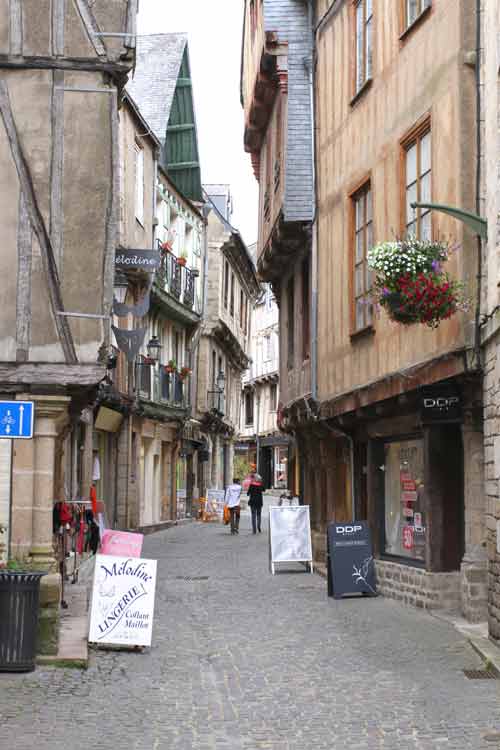
So many alley-ways with overhanging buildings click to enlarge
Piers and Lin
from the Saloon of Play d’eau
Fleming 55
You can get in touch with us any time by using our Contact Form.
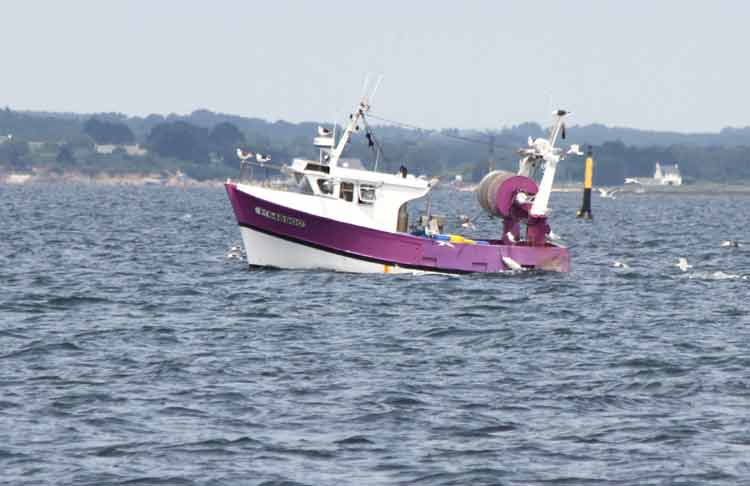
Many colourful trawlers fish the Baie de Quiberon with seagulls hitching rides waiting from breakfast click to enlarge
Our next port of call, the walled town of Vannes, is at the top of the beautiful Golfe du Morbihan. The Breton word Morbihan means Little Sea, an apt description given it covers over 100 square kilometres (approx. 12,000 hectares), with more than 40 islands, the largest of which is the Île aux Moines with its 7km coastline.
The inland sea of the Golfe du Morbihan is separated from the Atlantic by a narrow strait through which 400 million cubic metres of salt water pour at each high tide.
The nav plan
The pinch points start at the narrow strait entrance to the Golfe where tidal flows create currents of over 4kts. These become more pronounced as you pick your way through the islands towards Vannes, in one place exceeding 9kts. Bear in mind Play d’eau cruises at 8kts so we could easily find ourselves going backwards!
The ‘Sandbanks of Poole’ equivalent to the Golfe du Morbihan click to enlarge
We planned to leave Port Haliguen so we’d arrive at Port Navalo, the entrance to the Golfe, at its high tide to be carried on its peak to Vannes. In practice, it gave us an unexpected additional 2kts all the way.
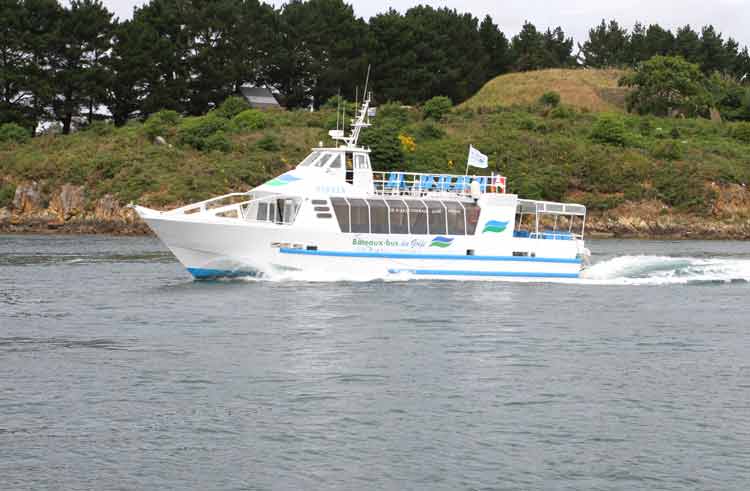
The Golfe is a favourite yachting area for thousands of boats. Couple this with fast Vedettes ferrying tourists, and it becomes a challenge to play boats against Vedettes against tides against the shallow sea!
Arriving
Access to Vannes is through a swing bridge which only opens at specific times. For us, this meant being at the bridge at 1530.
After three exiting yachts we went through and up a short canal to Vannes to berth.
Tecky details
The Vedettes don’t take prisoners. Travelling fast, they pass close and make large wakes click to enlarge
1242hrs FST – Departed Port Haliguen
1542hrs FST – Arrived Vannes
Planned distance – 19.3nm
Longest leg – 9.8nm of pilotage in the Golfe
Tech problems – nil
Piers and Lin
from the Pilot House of Play d’eau
Fleming 55
You can get in touch with us any time by using our Contact Form.
These were the voyages of Piers and Lin du Pré aboard their Fleming 55